
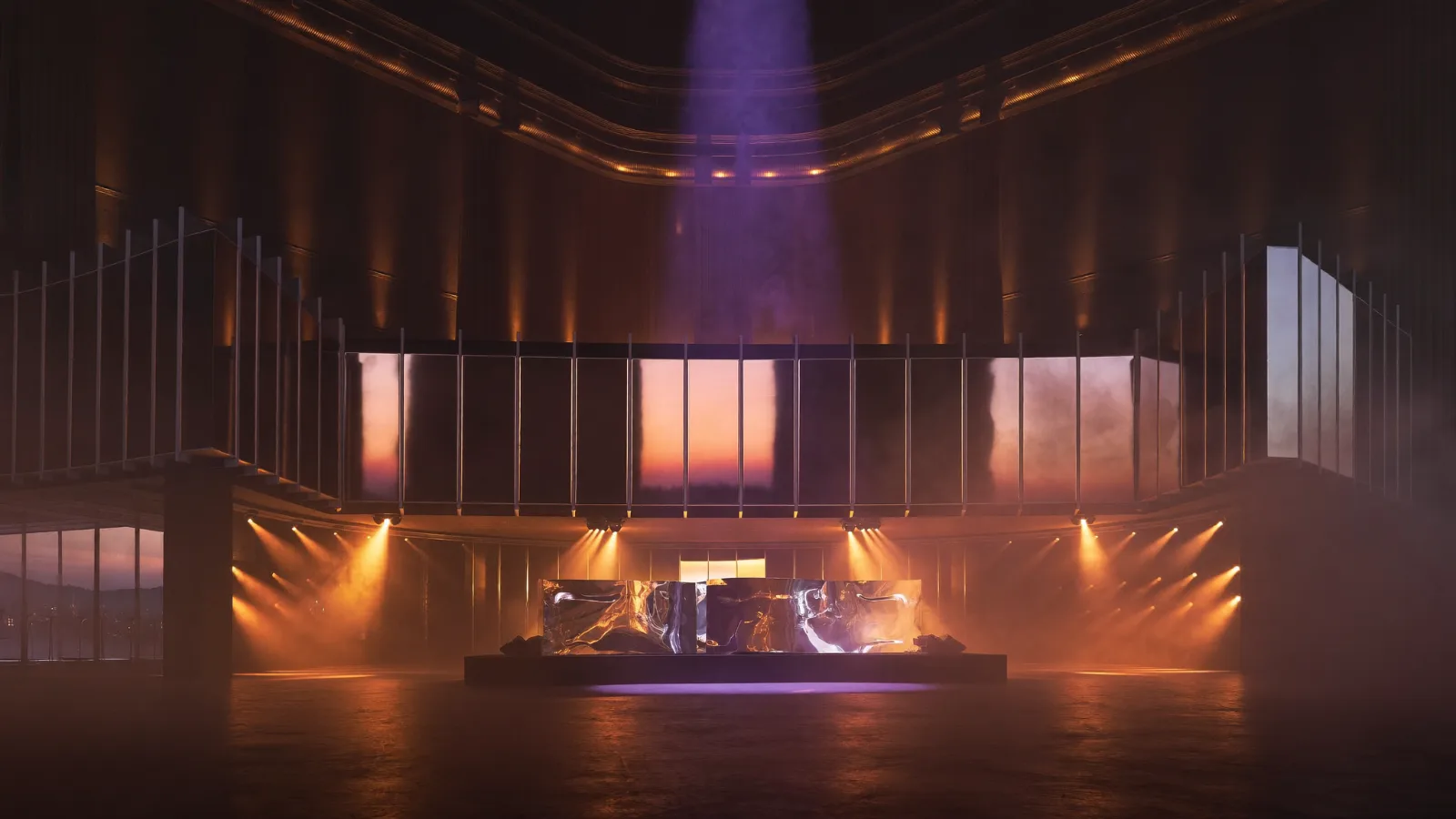
The brand activation examples worth copying are the ones whose constraint matches yours. Each of the eight below is a Geo Events build, told as the brief, the constraint, what was built and what a planner can take from it.
Most example lists recount famous consumer campaigns from the outside, using press coverage and a guess at why they worked. This one is written from the shop and the loading dock, so it says what each build had to survive. A brand activation, in one sentence, is a built, live experience that a guest steps into and acts on; our guide to what a brand activation is has the full definition, and our brand activations page shows how we scope them.
All eight projects are ours. Every fact comes from the project's own case study on geoevents.com, linked where the project first appears, and we state an attendance figure, a dimension or a deadline only when the case study does. We give no results, sales or press figures, because those pages give none.
What makes a brand activation example worth copying?
An example is worth copying when its constraint is one you share. The concept is the part everyone sees, but the constraint decides what gets built: a landmark floor that cannot be touched, a venue that stays open, a trade show clock that will not move.
Four questions sort any example, ours or anyone else's:
- What did the guest do inside it?
- What could the build not touch?
- What did the clock allow?
- What was finished in the shop before the venue ever saw it?
The table below maps the eight examples to those questions. It is a map, and each case study on geoevents.com carries the full gallery.
| Example | Type | Where | The constraint | Clock and scale (where the case study states it) |
|---|---|---|---|---|
| Barbie Dream House | Walk-through brand world | Cipriani, New York | Landmark venue, no contact with floors, walls or ceiling | One load-in day, strike in under eight hours, 500+ guests |
| White Claw Sessions | Summer venue takeover, four builds | The Surf Lodge, Montauk | Sand, salt air, sun and wind on an operating property | Transport of roughly 120 miles from Manhattan; on-site work was placement |
| NYLON Nights | Holiday-event takeover | The Surf Lodge, July 2025 | A recognizable venue at a peak cultural moment, nothing overpowering | Built with Bluarch Architecture |
| Magic Hour Mountain Lodge | Seasonal rooftop transformation | Moxy Hotel, New York | Eighteen floors up, wind exposure, no permanent modification | One season |
| Delilah x Chase | Pop-up that re-skins a building | Montauk, August 2026 | An operating restaurant, coastal exposure, no permanent modification | Full façade and a new entrance |
| Netflix booth | Trade show booth | Meadowlands Complex, New Jersey | The client's locked CAD drawings, exact tolerances | Two weeks, 22 by 22, 2,000+ attendees |
| Café de Colombia | Trade show activation built like a retail space | San Diego Convention Center | A crowded floor, live coffee service, three days of use | 14 days, 40 by 20 feet, 3,000+ attendees |
| One Love | Month-long public installation | One World Observatory, New York | Preserve skyline views, stay pristine for a month | 12 by 8 feet, Pride Month |
How do you build a place guests walk through?
Build the structure so it stands on its own, assemble it once in the shop, and install it inside a single load-in window. That is how Barbie Dream House at Cipriani worked: a two-story structure guests walked through, not a backdrop they stood in front of.
Client and brief. Barbie and Mattel wanted a two-story Dream House inside one of New York's best-known event venues, 500+ guests, built as an architectural structure to be walked through and photographed from every angle.
Constraint. According to the case study, the venue had strict load-bearing restrictions, limited load-in access and zero tolerance for damage to historic surfaces. Load-in is the delivery and assembly window; strike is the takedown. Both had to fit the venue's windows.
Build. We engineered a modular, self-supporting steel and wood structure, prefabricated in our New York shop and test-assembled there before delivery. Self-supporting means the structure carries its own weight to the floor and needs nothing from the building to stay up. Scenic panels, branded surfaces and interior vignettes were drop-in components that attached to the primary structure and never touched the venue's floors, walls or ceiling. Protective flooring covered the venue floor. Our crew assembled the house in a single load-in day, and strike took under eight hours. Surfaces were matched to Pantone specifications, with the client approving color samples before full production.
Take-away. A walk-through structure is an engineering project first and a design second. Ask the venue for load-in access and floor rules before the concept is approved, because they decide how the pieces are sized. Our guides to builds that leave no mark on landmark buildings and to installation and strike cover the method in detail.
How do you make a property yours for a night or a season?
The strongest venue takeovers are total enough that the brand owns the frame of the photo and restrained enough that nothing looks bolted on. They also leave the venue exactly as they found it. Three of our builds show different ways to do that. For the wider picture, see our guide to hotel brand activations.
White Claw Sessions at The Surf Lodge
For White Claw Sessions, White Claw's summer takeover of The Surf Lodge in Montauk, we fabricated, produced and installed four builds on one property.
Brief and constraint. The case study describes the balance the brief demanded: total enough that White Claw owns the frame of every photo, restrained enough that nothing looks bolted onto a beach club. Every piece would live outdoors in sand, salt air, direct sun and wind off the pond, on an operating property with short install windows.
Build. A reclaimed-wood sign on the gateway off Edgemere Street. Custom White Claw Sessions surfboards on freestanding mounts. Nine oversized mirror-finish letters on a low plinth on the sand at the edge of Fort Pond. An oversized photo frame covered in can-tab graphics on the waterfront deck. Each piece was fully resolved in the shop and engineered for transport of roughly 120 miles east from Manhattan, then carried across the beach by hand, so on-site work was placement and alignment.
Take-away. Resolve every piece in the shop so site time is placement, and design a path of four moments rather than one hero object. Our guides to brand activations in Montauk and the Hamptons and to outdoor structures, ballast and wind cover the site conditions.
NYLON Nights at The Surf Lodge
For NYLON Nights, NYLON Magazine's Fourth of July celebration in July 2025, we partnered with Bluarch Architecture to fabricate and install a series of premium branded activations at The Surf Lodge.
The constraint was visibility without overpowering: a highly recognizable venue at a peak cultural moment, with a fast-paced live event around every piece. The case study describes a series of custom activations at key touchpoints, with focus on material quality, finish and placement. It does not list the individual pieces, so we will not invent them.
Take-away. When the venue is already the draw, integrate; do not impose.
Magic Hour Mountain Lodge at the Moxy
Magic Hour Mountain Lodge was a seasonal transformation of Magic Hour, the West Terrace bar at the Moxy Hotel, eighteen floors above midtown, into an Aspen-inspired après-ski lodge with a Western layer.
Constraint. Everything had to install onto existing surfaces with no permanent modification, hold up to exposed rooftop conditions for a full winter and break down cleanly. The concept was a second problem: two visual languages had to read as one room, not a costume party.
Build. Faux log cabin walls were fabricated in the shop and finished to read as timber from phone-camera distance, which is the finish distance that matters when guests photograph each other. They were installed around the dining tables without modifying the rooftop's walls or rails. One composed decor wall of bighorn antlers, cowboy boots, coiled ropes and dimensional Western artifacts carried the Western layer. Faux snow accented the perimeter, ledges and furniture feet. Wall sections were weight-rated for sustained wind, and the case study says major fabricated elements are catalogued for possible redeployment.
Take-away. Put the second visual idea in one strong moment, not everywhere. Our guides to seasonal venue transformations and to rooftop activations go deeper on both halves of that build.
Pro Tip: Before you compare concepts, ask each venue for three things in writing: the install window, the freight route with its dimensions, and its surface-protection rules. Those three answers set more design limits than the brand guidelines do.
What does it take to re-skin an operating building?
Treat the building as a single re-skin: façade, entrance and arrival designed together, so the host venue's identity is gone from the first sightline. That is the logic of the Delilah x Chase pop-up in Montauk, built in August 2026.
Brief. For the supper club's collaboration with Chase, guests had to feel they had stepped into Delilah, not into a local restaurant wearing Delilah's logo.
Constraint. The venue was an operating restaurant the client did not own. A mirror-clad façade has to read as one continuous surface at photographic distance, survive Montauk's salt air, wind and full summer sun, and install without permanent modification. The new entrance had to work at full guest flow for the whole run.
Build. A paneled mirror cladding system, fabricated in our shop and installed over the existing exterior as a complete surface, plus an entirely new built entrance composed with the façade as one architectural statement. Cladding means a new surface applied over an existing one. Inside, the room was styled as a one-of-a-kind Delilah environment and designed to come out cleanly when the pop-up closed.
Take-away. Arrival is where a takeover succeeds or fails, so decide what the guest sees before the door. Our guides to mirror finishes and to pop-up shop construction cover the cladding and the schedule. Our product launch and pop-up production team builds this kind of project.
What do you build when the floor is crowded and the clock is short?
When the clock is short, lock the design before fabrication starts, run every trade in parallel and test-fit the whole build in the shop. Two of our trade show builds show what that looks like, and our trade show builds page lists the rest.
Netflix at the Meadowlands
The Netflix booth at the Meadowlands Complex was a 22 by 22 custom booth in New Jersey, built from Netflix's existing CAD drawings on a two-week build cycle for a trade show of more than 2,000 attendees.
Brief and constraint. The design arrived locked. The job was to translate an approved CAD package into a flawless booth, and any deviation from the drawings would read as a defect. The footprint left no slack for custom millwork, lighting fixtures, flush-mount televisions and a branded LED logo. Flush-mount means the screens sit recessed in wall pockets, level with the surface. The case study notes that a pocket a sixteenth of an inch off reads as sloppy. It also says work at this scope typically runs four to six weeks and was compressed to fourteen days.
Build. Every drawing went through engineering review in the first 48 hours. Wall sections were fabricated as modular panels with internal channels so cabling ran behind the surface. The LED logo was color-matched to Netflix red under tested trade show lighting. Millwork, metal, finish, electrical and AV ran in parallel, and the booth was prebuilt and dry-fit in the shop, so the on-site build was assembly, not problem-solving. A dry fit is a full test assembly before shipping.
Take-away. A locked design is what makes a short clock possible, and the review in the first two days is where the schedule is won. See our guides to trade show booth fabrication and to custom versus modular booths.
Café de Colombia at the San Diego Convention Center
Café de Colombia at the San Diego Convention Center was a 40 by 20 foot, 800 square foot activation for more than 3,000 attendees, designed, built, branded and delivered in fourteen days.
Brief and constraint. The activation had to hold its own on one of the largest convention floors in the country and read as a permanent retail environment, not a temporary booth. The floor had hundreds of competing exhibits, flat overhead light and dense circulation, and the build had to survive three days of live service.
Build. The footprint was resolved into three programmed zones: a full-service coffee bar built to retail operational standards, two tasting display areas, and a concealed storage and prep zone behind a branded millwork wall. Surfaces had retail-grade finishes, CNC-cut signage and proper joinery. CNC means computer-controlled cutting, which makes identical parts from a drawing. The build was crated, shipped and installed in under a day. The case study notes the design language can be reconfigured for other footprints and shows.
Take-away. Separate service from experience, and hide the operation. See our guides to convention center activations and to CNC fabrication.
Pro Tip: On a short clock, spend your decisions early and your revisions never. The Netflix case study says the booth's two-week timeline was possible because the design was fully locked at kickoff; we plan every compressed build the same way, with dimensions, finishes and graphics fixed in the first days.
How do you build something that has to last a month?
A month-long public installation is a durability specification first and a design second. One Love at One World Observatory is the example.
Brief. To celebrate Pride Month, One World Observatory wanted an installation that honors inclusivity, diversity and love and complements one of the most famous views in the world. We worked directly with the marketing team for the whole One World Trade Center complex.
Constraint. The case study lists five demands: celebrate Pride Month, integrate into the Observatory environment, preserve skyline views, encourage interaction and sharing, and stay visually pristine through a month-long public run.
Build. A custom photo activation titled One Love, 12 feet wide and 8 feet high: a laser-cut acrylic sculpture with layered translucent buildings, a rainbow color progression, a stylized New York skyline and a featured One World Trade Center.
Take-away. Color built into the material beats color applied to it, and cleaning and wear belong in the first drawing, because thousands of hands touch the piece before the month ends. Our guides to Pride Month installations and to laser-cut acrylic installations explain why.
What do the eight builds have in common, and what should a brief say?
Each example was decided by something the brief stated early: the venue's rules, the clock, the finish distance and what happens at strike. The table shows what each statement let the shop do.
| What the brief stated | Example that shows it | What it let the shop do |
|---|---|---|
| The venue's limits in writing (floor, walls, access) | Barbie Dream House | Engineer a self-supporting structure and plan one load-in day |
| The finish distance | Magic Hour (timber from phone-camera distance) | Spend finishing hours where the photograph is |
| A locked design | Netflix | Run every trade in parallel on a fourteen-day clock |
| The operating business underneath | Delilah x Chase, White Claw | Build free-standing or reversible, and install around service |
| The strike plan | Magic Hour, Delilah x Chase | Build so it comes off cleanly and can be redeployed |
Pro Tip: Bring the people who will install the work into the room before the concept is locked, even for an hour. The person who has carried panels through that loading dock knows which wall will not fit.
How do you turn an example into your own brief?
Copy the constraint, not the look. Write down your venue's rules, your clock and what the guest should do, then ask a builder what that allows. The table below is the brief we want to receive.
| Brief line | Why a builder needs it |
|---|---|
| The action you want the guest to take | It decides the type of build: tasting bar, photo moment, point of sale |
| The venue and its written rules (floor, walls, load-in, freight elevator) | They set the largest piece and how it attaches |
| The open date and the real install window | The clock runs backward from them |
| The footprint and height | They set structure, lighting and crating |
| What the build must survive (weather, crowd, run length) | They decide materials and finish |
| The finish distance: who sees it, from where | It tells the shop where to spend finishing hours |
| Content capture points | They place the lighting and the photo moments |
| Strike and reuse | They decide how the build is joined and crated |
On timing, our brand activations page states 6 to 8 weeks from approved concept to launch for a focused activation with custom-built environments, and 10 to 16 weeks for large-scale architectural activations. The Netflix booth (two weeks, locked drawings) and Café de Colombia (fourteen days) show what compression looks like and what it needs. Compression has trade-offs, and we do not promise it. Our custom build timeline and site survey guide show what to settle first, and a run of show turns the plan into cues.
Measurement belongs in the brief too. We run the post-event survey and deliver a results report; what it asks is agreed at the start. Our guide to measuring an activation shows what to build into the room so the numbers exist.
Why work with a full-service production company on a brand activation?
Every example above came down to decisions that depend on each other: the design, the shop build and the install. One team makes them together. When the same people draw the structure, build it and install it, nobody on site is guessing what the designer meant.
Geo Events brings more than 15 years in event production and more than 200 events built in-house. We design and fabricate in our New York studio. As our brand activations page says, we partner with creative agencies, brand consultancies and PR firms as their design and production arm, and we work directly with brand marketing teams who want a single partner. Our builds are purpose-built for each program, and our brand activation fabrication, event fabrication and full-service event production teams work under one roof. The same page states that we provide detailed scoping within 48 hours of a brief.
Tell us the venue, the date and what you want guests to do. We respond within one business day with a production scope and next steps.
Frequently asked questions
What are some examples of brand activations?
A walk-through brand world (the Barbie Dream House at Cipriani), a venue takeover (White Claw Sessions at The Surf Lodge), a pop-up that re-skins a building (Delilah x Chase in Montauk), trade show builds (the Netflix booth and Café de Colombia), a seasonal rooftop (Magic Hour Mountain Lodge) and a month-long public installation (One Love at One World Observatory).
How does a brand activation work?
It runs in four stages. Strategic immersion defines the purpose and the action you want from guests. Spatial concept and visualization shows the environment on screen. Fabrication and production builds and pre-assembles it in the shop. Installation and strike puts it in the venue, runs it and removes it, leaving the venue as it was found.
What are creative brand activation ideas for events?
Start with the guest's action: tasting, trying, photographing or buying. Then pick the build that serves it, such as a tasting bar, a framed photo moment, a mirror-clad façade or a walk-through structure. Our guide to brand activation ideas built to be photographed covers twelve of them, grouped by the photographic principle behind each.
How much does a brand activation cost?
It depends on scope, site and run length, and any figure is an estimate, never a set price. Footprint, materials, indoor or outdoor conditions, technology, labor rules and strike all move it. Send us the venue, the date and the action you want from guests, and we respond within one business day with a production scope and next steps.