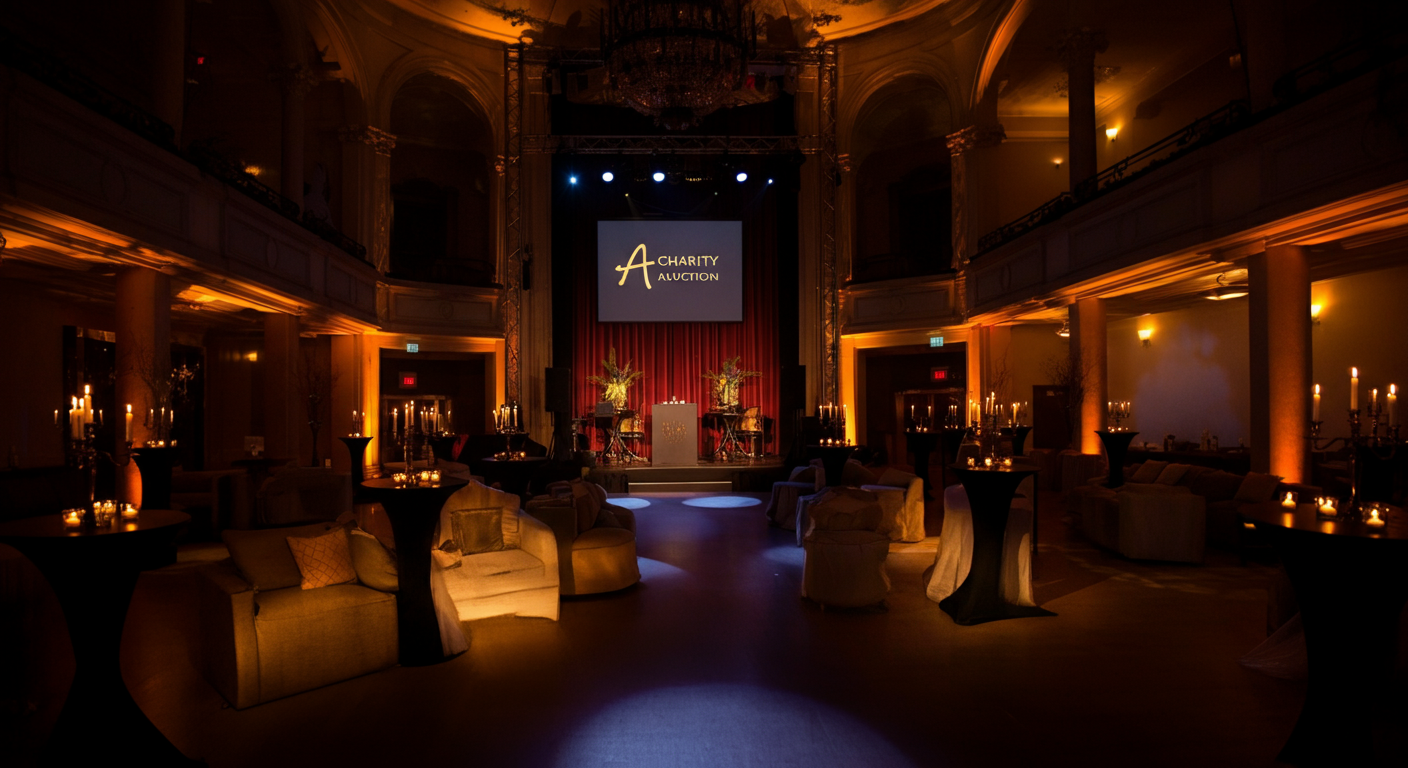
A fundraising gala is an exercise in emotional architecture. Every production element—from the room’s lighting temperature to the timing of the paddle raise—is designed to create the psychological conditions under which generosity flows naturally. Organizations that treat their galas as obligations rather than opportunities leave enormous revenue on the table. Those that commit to professional production consistently raise more money, attract higher-caliber donors, and build the kind of institutional prestige that sustains giving year over year.
Fundraising Strategy and Revenue Architecture
The most effective fundraising events generate revenue through multiple channels: ticket sales, sponsorships, live auction, silent auction, paddle raise (fund-a-need), raffles, and post-event giving. Each channel requires distinct production support. The revenue architecture should be designed before any creative decisions are made, because it determines the run-of-show structure, the room layout, and the emotional pacing of the evening. A common mistake is treating the fundraising ask as a single moment; in reality, the entire evening should be designed as a graduated series of engagement opportunities that build toward the paddle raise.
Auction Mechanics and Revenue Optimization
Live auctions are theatrical performances, and the auctioneer is the star. Professional benefit auctioneers—specialists who work exclusively in charity events—typically generate 30-50% more revenue than general auctioneers or volunteer emcees. Auction item selection and sequencing directly affect revenue: lots should escalate in value, unique experiences consistently outperform physical goods, and the number of live auction items should be limited to eight to twelve to maintain energy and avoid auction fatigue. Silent auctions have largely migrated to mobile bidding platforms, which increase participation, extend bidding windows, and eliminate the bottleneck of paper bid sheets.
The Paddle Raise: Engineering the Moment
The paddle raise—or fund-a-need—is typically the single largest revenue generator at a fundraising gala, often accounting for 40-60% of total event revenue. Its success depends on precise emotional calibration: a mission moment (video, live testimony, or speaker) that connects donors to impact immediately before the ask, a professional auctioneer who understands giving psychology, and a room environment that creates social proof—donors who see their peers giving feel compelled to participate. The lighting, audio, and AV support during the paddle raise must be flawless; any technical disruption during this critical window directly reduces revenue.
Donor Stewardship and Recognition
A fundraising gala is a stewardship event as much as a revenue event. Major donors attend not only to give but to feel valued, connected, and informed about their impact. Production design should include meaningful donor recognition—not just logo walls, but curated experiences: VIP receptions, private meet-and-greets with program beneficiaries, premium seating with organizational leadership, and personalized acknowledgments during the program. The arrival experience for major donors should signal their importance from the moment they step out of their car.
Honoree Programs and Mission Storytelling
Most fundraising galas honor individuals or organizations whose contributions merit public recognition. The honoree program serves a dual purpose: it celebrates the honoree and it motivates the audience to emulate their generosity. Honoree tributes should be produced as broadcast-quality video packages—three to five minutes of compelling storytelling that communicates impact visually and emotionally. Live remarks by honorees should be coached for brevity and impact; the most generous donors are rarely the most polished speakers, and production support (teleprompters, time cues, warm introductions) helps them shine.
How Production Value Increases Donations
There is a direct and measurable relationship between production quality and fundraising revenue. Research consistently shows that donors give more generously in environments that signal significance, competence, and aspiration. A beautifully produced gala communicates that the organization is well-managed, that donor contributions will be stewarded responsibly, and that the cause is worthy of serious commitment. Conversely, a poorly produced event—bad lighting, muffled audio, disorganized programming—signals organizational mediocrity and suppresses giving. Production quality is not competing with the mission; it serves the mission by creating the conditions under which maximum generosity occurs.
Post-Event Giving and Follow-Up Strategy
The fundraising opportunity does not end when guests leave. A comprehensive follow-up strategy—thank-you communications within 48 hours, impact reports within 30 days, and ongoing stewardship touchpoints throughout the year—converts one-time gala donors into sustained supporters. Post-event video content from the gala itself becomes a powerful solicitation tool for donors who did not attend. The event should be designed with post-event content capture in mind: professional photography, testimonial interviews, and highlight reels that extend the gala’s fundraising impact well beyond the evening itself.
Learn how GEO Events brings production excellence to mission-driven organizations through our milestone event services, or explore how corporate gala production techniques apply to fundraising environments.