CASE STUDY NO. 10
Magic Hour Mountain Lodge at Moxy NYC
- Client
- Magic Hour at Moxy NYC
- Location
- Magic Hour Rooftop, Moxy Hotel, New York, NY
- Category
- Decor
- Event Type
- Brand Activations & Experiential, Pop-Up Experiences
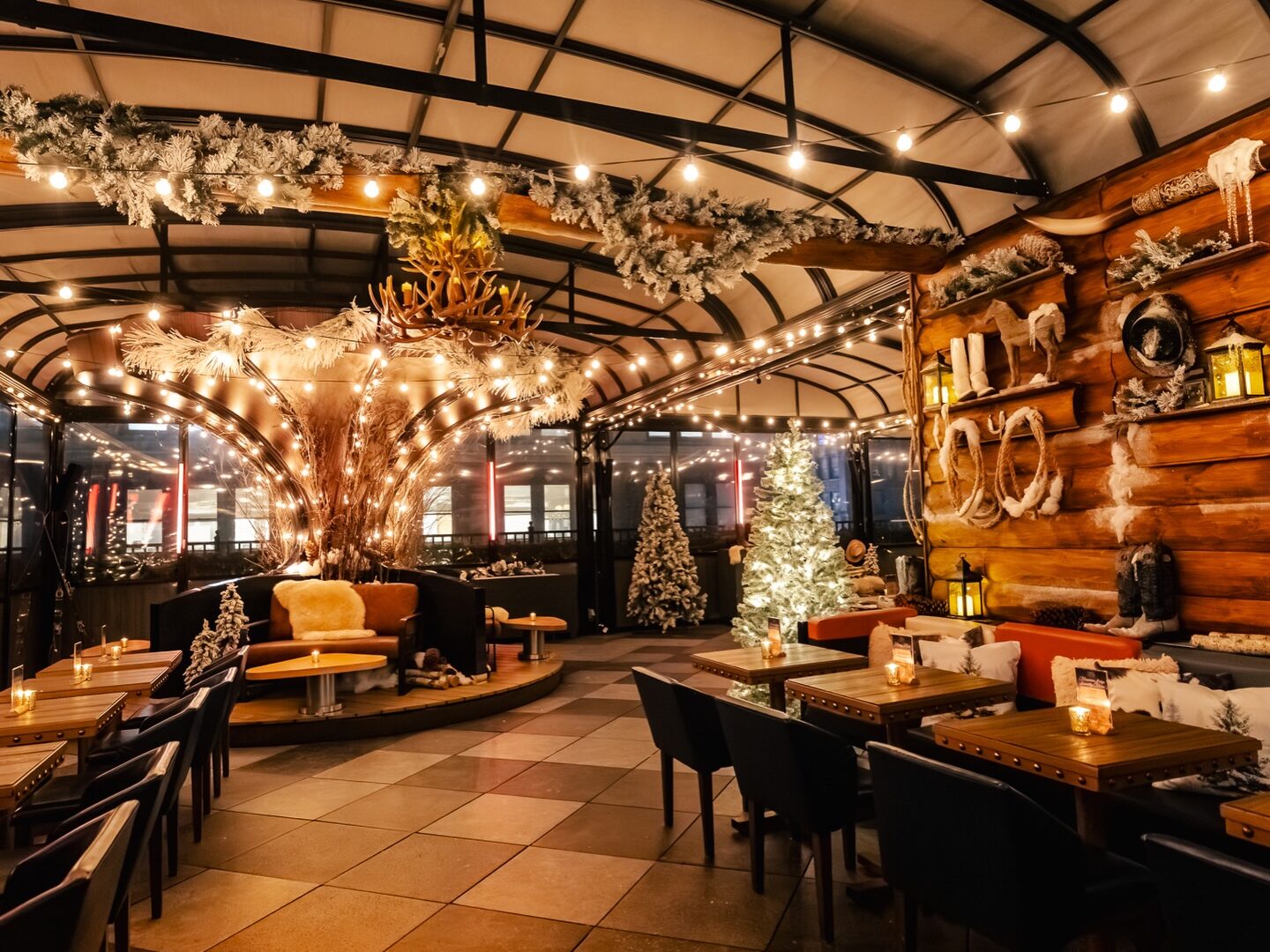
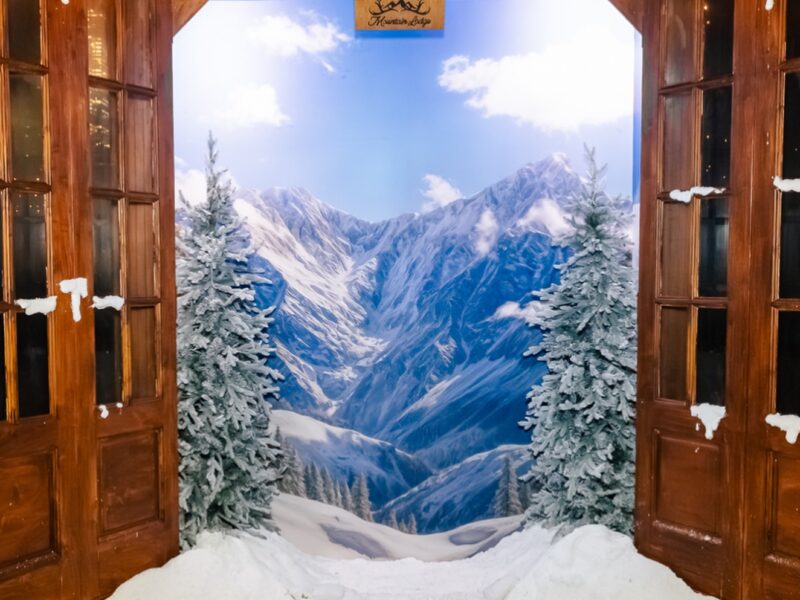
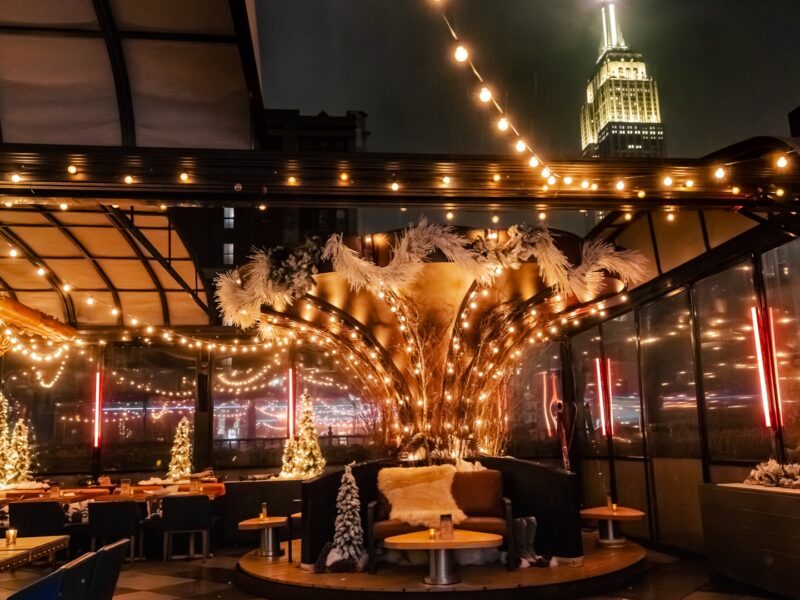
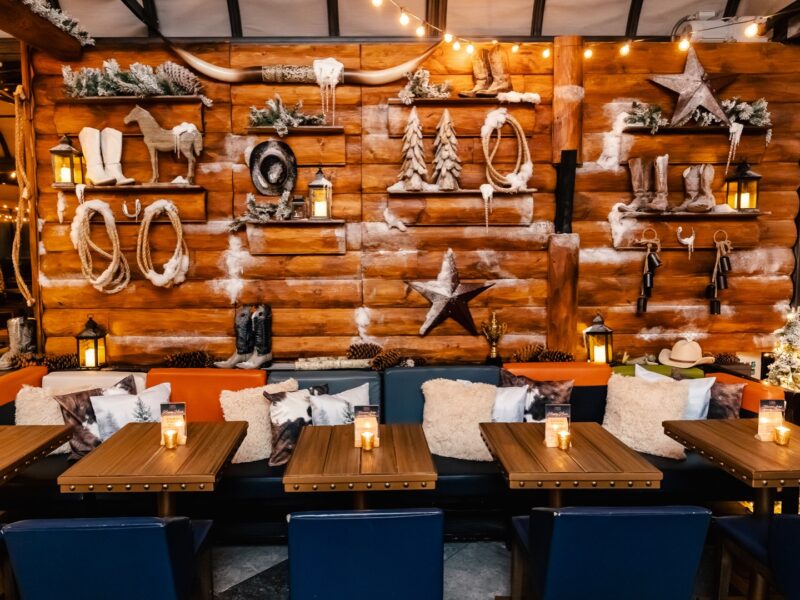
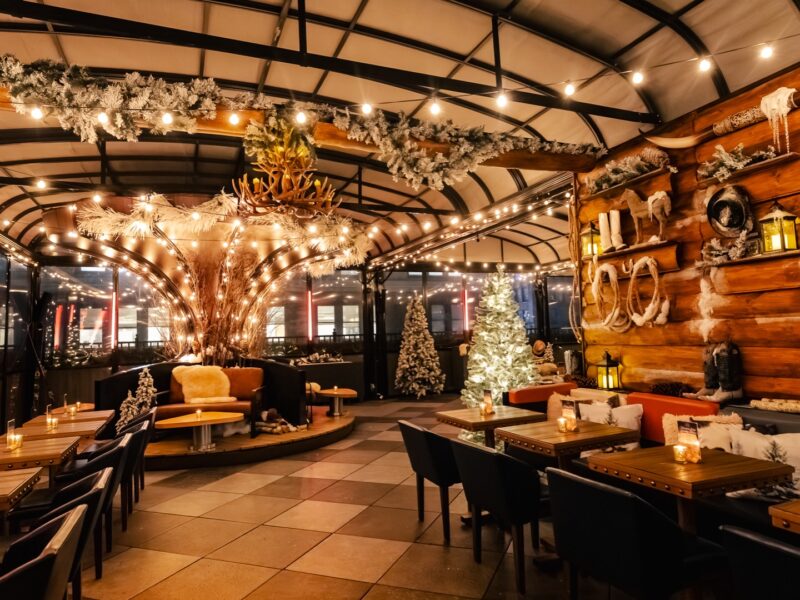
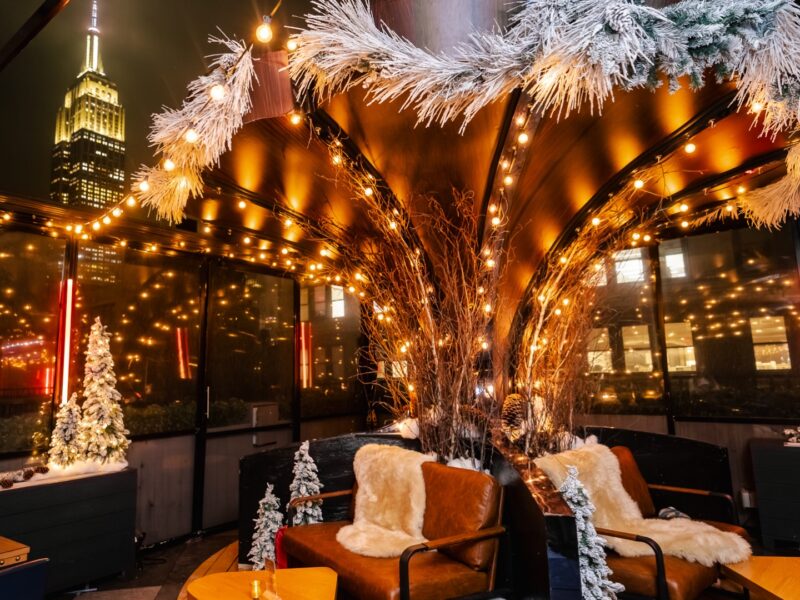
A seasonal rooftop transformation of Magic Hour, the West Terrace bar at the Moxy Hotel, into Magic Hour Mountain Lodge — eighteen floors above midtown — designed, fabricated, and installed as an Aspen-inspired après-ski environment with faux log cabin walls around the dining tables, a Western-flavored decor wall featuring bighorn antlers, cowboy boots, ropes, and faux snow, and a curated set of photo moments engineered for the winter content feed. Built to layer onto the existing rooftop architecture for a single-season run, then break down cleanly when the season ended.
Magic Hour already has an identity. Eighteen floors above the city, the rooftop carries its own design language, sightlines, and operational rhythm — so the brief was not to design a new venue but to layer one inside the one that already existed. Magic Hour Mountain Lodge had to read as a complete world the moment a guest stepped onto the West Terrace, while leaving the bones of the rooftop intact for the season afterward. Every fabrication had to install onto existing surfaces without permanent modification, hold its own at exposed rooftop conditions for a full winter, and break down cleanly when the season ended.
The concept itself was the second challenge. The brief fused Aspen ski lodge with a Western frame — two distinct visual languages — and the activation had to translate that fusion into a coherent room rather than a costume party. Get the balance wrong and the space reads as either generic ski cabin or theme-park Western. Get it right and it earns the kind of photography that drives the post-event content cycle, which is the metric a seasonal pop-up actually lives or dies on.
We treated the existing rooftop as architecture and built the activation as a layered envelope inside it. Faux log cabin walls were fabricated in our shop, finished to read as authentic timber from phone-camera distance, and rigged to install around the dining tables without modifying the rooftop’s existing walls or rails. The wood vocabulary anchored the lodge half of the concept — every surface guests touched, leaned against, or photographed against carried the cabin’s warmth, which is what kept the Aspen reference from feeling applied rather than built in.
The Western layer landed as a curated decor wall — the visual punctuation that distinguished Magic Hour Mountain Lodge from any generic après-ski pop-up. Bighorn antlers, cowboy boots, coiled ropes, and dimensional Western artifacts were assembled into a single composed wall, finished and hung as a deliberate gallery rather than a prop pile. Faux snow accented the perimeter, the ledges, and the feet of the dining furniture, completing the seasonal envelope without burying the underlying decor beneath it.
Every fabrication element was engineered for the rooftop’s specific operational profile: weight-rated for outdoor wind exposure, finished in materials that could survive a full winter of moisture and temperature swing, and detachable for clean post-season removal. The build layered onto and around what Magic Hour already had — the bar, the seating, the views — rather than competing with them, which meant guests experienced the existing rooftop and the seasonal transformation as one unified room rather than as two designs negotiating with each other.
The result was a rooftop that read as a destination rather than a decoration — a winter activation that took an iconic eighteenth-floor venue and made it the city’s après-ski address for the season.
By the Numbers
Visual Archive
The Gallery
Common Inquiries
Case Details
What was layered onto the existing rooftop versus built from scratch?
Magic Hour’s rooftop architecture, bar, seating footprint, and view corridors stayed in place. We layered the lodge envelope on top of and around them — faux log cabin walls installed around the dining tables, a composed Western decor wall, faux snow accents, and seasonal furniture treatments — all rigged without permanent modification so the rooftop could return to its standard configuration when the season ended.
How was the Aspen-meets-Western fusion balanced visually?
The lodge half of the concept was carried by the timber vocabulary — every surface guests touched, leaned against, or photographed against was finished as warm cabin wood. The Western layer landed in a single composed decor wall — bighorn antlers, cowboy boots, ropes, dimensional Western artifacts — assembled as a curated gallery rather than scattered as props. Concentrating the Western language in one strong visual moment kept the room from feeling like a costume party.
What rooftop-specific build considerations applied?
The rooftop’s exposure profile drives every fabrication decision. Wall sections were weight-rated for sustained wind, every visible surface was finished in materials that survive a full winter of moisture and temperature swing, and the entire envelope was engineered to install onto existing surfaces without permanent modification. We also designed for clean detachment — the post-season strike was as carefully choreographed as the install.
What happens to the build when the season ends?
The activation breaks down cleanly. Every layered element — the cabin walls, the decor wall components, the snow treatments, the furniture wraps — was engineered for non-permanent install, which means the rooftop returns to its standard Magic Hour configuration without remediation. Major fabricated elements are catalogued for potential redeployment in future seasonal activations.
Why design seasonal activations layered onto existing venues?
Seasonal rooftop activations live or die on the photography they generate during a short run. Layering onto a venue that already has identity — like Magic Hour’s eighteenth-floor terrace — gives the activation built-in production value the moment a guest steps onto the deck, and lets the seasonal envelope concentrate on the moments that actually drive the content feed: the photo wall, the dining environment, the curated decor punctuation.
Designed and produced by Geo Events.
Experiences That Make Brands Unforgettable arrow_forward

Start the Conversation
Let's discuss how we can elevate your next landmark event into a cinematic experience.