
A well-produced event rents the things nobody is meant to notice and fabricates the three or four things everyone photographs. That is the whole principle. The build-or-rent question gets treated as a single decision made once, at the top of a project, when it is actually a dozen small decisions made element by element, and the projects that go wrong are the ones that answered it in one stroke.
The event fabrication vs rental question is usually framed as a cost conversation, and that framing is what sends it sideways. It is really a question about specificity: how particular does this object have to be to this brand, this room, and this one night? Answer that honestly for each element on the plan and the scope sorts itself out, usually into a mix.
What follows is the framework our production team works through when a client sends a ground plan and asks what should be built. It is the same conversation whether the project is a trade show booth, a rooftop takeover, or a private celebration in a landmark room.
What rental inventory is genuinely good at
Rental is the right answer for structure that does a job and then disappears. Stage decks, risers, truss, standard seating, pipe-and-drape, most soft goods, and the lighting positions that simply need to exist are commodities in the best sense of the word: engineered, repeatable, inspected, and available on short notice. Renting them is not a compromise, and treating it as one is a good way to spend a build cycle on a platform no guest will ever look at directly.
Modular systems earn their place here. A modular staging kit exists precisely because thousands of events need a level surface at a known height, and the rental house has already solved the math, the railing, and the load rating. Our crews would rather spend their hours on the object that carries the brand than on reinventing a deck.
Rental also arrives with its paperwork already done. Flame-certification documents for soft goods, load ratings for decks, and engineering letters for standard structure are part of what the inventory owner maintains, and a venue’s fire marshal has usually seen the same system before. On a custom piece, that documentation becomes part of the build itself, which is one of the quieter reasons a fabricated element needs more calendar than its cut list suggests.
Rental starts to betray itself the moment it is asked to carry identity. The surfaces are the finishes the rental house stocks, the dimensions are what fits their existing crates, and the wear is the accumulated history of every show that used the piece before yours. From one camera angle it reads fine. From the other three it reads like inventory.
The five questions that decide what gets built
Every event fabrication vs rental call we make with a client comes back to the same short list. Run each element on the plan through all five.
How specific is it to the brand?
If an object has to carry the brand’s name, hold its exact color, or reproduce a proprietary shape, it gets fabricated. There is no inventory version of a logo. For the White Claw Sessions takeover in Montauk, our shop built mirror-finish WHITE CLAW letters that stand on the sand at the edge of Fort Pond and a reclaimed-wood entrance sign, then produced and installed both on site. Those are not pieces you source. They are pieces you draw, cut, finish, and carry down to the beach.
Will guests see it at arm’s length?
Distance is a material decision. At thirty feet, a rental flat and a shop-built wall can read identically. At three feet, guests see seams, edge treatment, fastener heads, and the difference between a sprayed finish and a laminate that has been trucked to forty shows. Anything a guest will lean against, set a drink on, or stand beside for a photograph belongs in the fabricated column.
Lighting narrows the gap or widens it. A rented flat under a flat wash looks like what it is; the same surface raked with a warm side light can pass. That works both ways, and it is why finish decisions and lighting decisions belong in the same conversation rather than in sequence. A fabricated surface is specified for the light it will actually sit in, which is a luxury rental inventory cannot offer, because it was finished for every room at once.
The threshold is worth naming in the brief. When we transformed a midtown rooftop bar into Magic Hour Mountain Lodge, the faux log cabin walls that wrap the dining tables were shop-built and finished to read as timber from phone-camera distance, because that is exactly where guests were going to see them from.
Is it the thing that gets photographed?
Look at the plan and ask which two or three elements will appear in most of the night’s images. Those elements are not decor. They are the deliverable, and the rest of the room is support. The White Claw pieces were built to be photographed from the beginning, which changes the engineering as much as the aesthetics: an oversized photo frame on a waterfront deck has to survive a crowd leaning into it all afternoon and still look new in the last frame of the day.
Does it need to live past this event?
A fabricated element can be built to come apart, crate, travel, and go back up somewhere else. A rented one cannot be reused, because it was never yours. The two-story Barbie Dream House built inside Cipriani was engineered as a modular, self-supporting steel and wood structure, pre-fabricated in our New York shop and test-assembled before it ever went out the door. Modularity is what makes a build repeatable rather than disposable, and it is worth asking for at the drawing stage, not after the first install.
What will the venue actually allow?
Access is the constraint clients discover last. Every piece has to clear a loading dock, a corridor, a door frame, and in Manhattan very often a freight elevator with a fixed interior dimension and a ceiling that is lower than anyone expects. Rental inventory is already sized to travel; a custom element has to be designed backward from the building’s tightest opening, broken into sections that fit and seams that land somewhere the eye does not follow. Measure the elevator before you fall in love with the wall.
Sometimes the venue decides for you, and the answer is a build. Landmark interiors, hotel rooftops, and observation decks routinely forbid anchoring into floors, walls, or ceilings, which rules out whole categories of standard rental structure and puts the job squarely in free-standing, self-supporting territory. The Barbie house attached as drop-in components without touching the venue’s original surfaces. The rooftop lodge was installed without modifying the rooftop. Neither of those is an off-the-shelf capability; both are what event fabrication is for.
Lead time is the real constraint, not complexity
The honest advantage of rental is the calendar. Inventory exists today; a fabricated piece exists after drawings, engineering review, cutting, assembly, finishing, and a test fit. When a date is three weeks out, that sequence is the thing standing between an idea and a room.
But fast custom work is more possible than most clients assume when the decisions land early. The Netflix booth at the Meadowlands Complex was a twenty-two-by-twenty-two-foot custom build produced on a two-week cycle from the brand’s existing CAD drawings, with engineering review of every drawing completed in the first forty-eight hours. The Café de Colombia activation in San Diego was designed, built, branded, and delivered in fourteen days, coffee bar included, at retail operational standards.
What those projects have in common is not heroics. It is that the drawings existed, the approvals happened immediately, and nothing material changed after day one. What compresses in a production schedule is fabrication hours, which can be met with more of the shop. What does not compress is engineering review, client approval, and the time a finish needs to cure. If a project cannot absorb those three, rent the structure and fabricate the hero.
The hybrid is usually the right answer
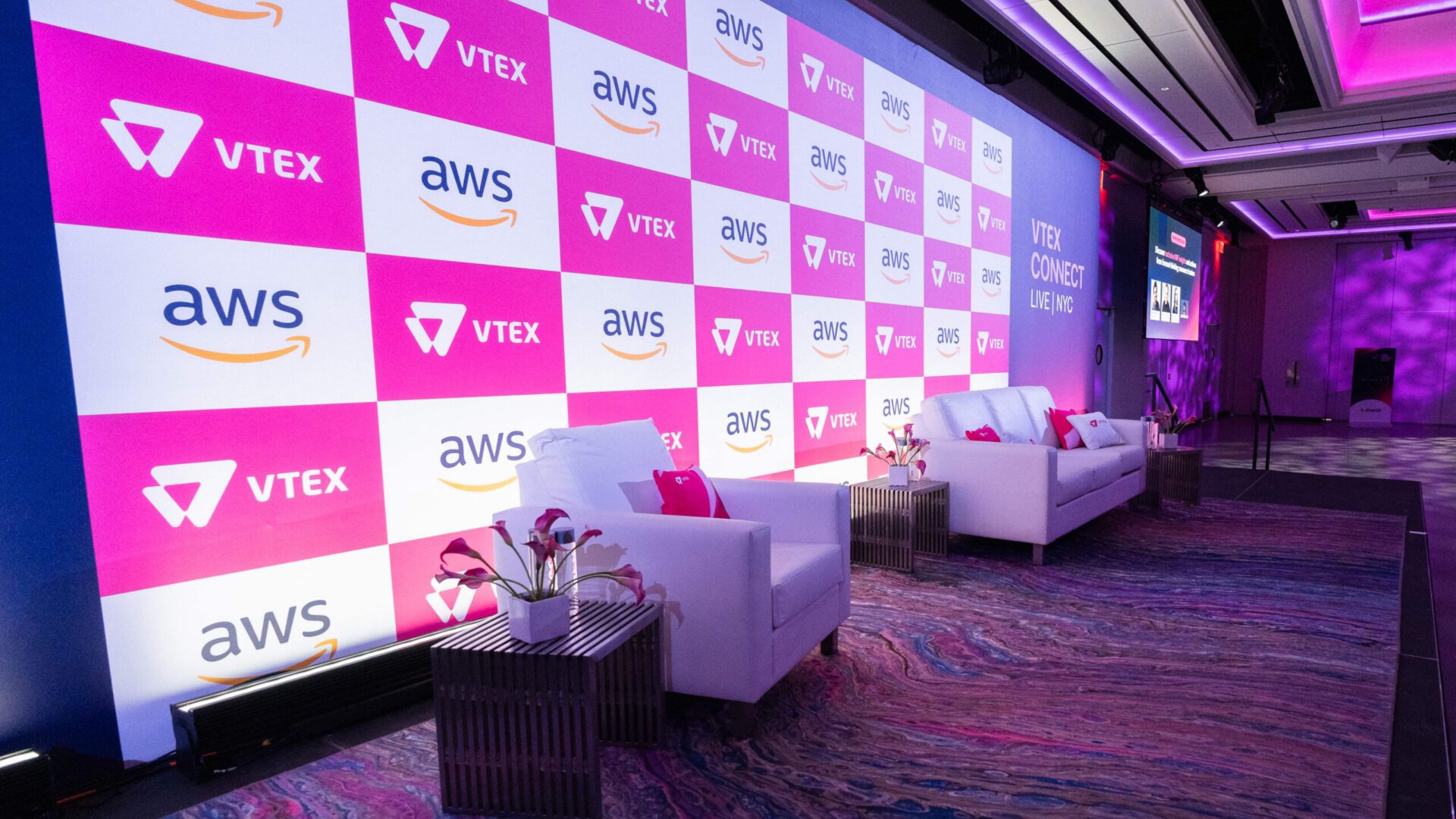
In practice most of our work lands in the middle: custom fabrication where the brand lives, rented structure everywhere else. The VTEX event at The Glasshouses was built as a brand immersion rather than a conference reception, with custom scenic fabrication in steel framing and industrial-finish surfaces that echoed the venue’s own glass-and-steel architecture, plus branded environmental graphics, dimensional signage, and architectural lighting. The scenic conversation with the building is what the fabrication bought. The elements that simply needed to function did not need to be invented.
This is why we push back on both extremes. A room where everything is rented reads as a room that was booked, not designed. A room where everything is fabricated usually means someone spent the schedule proving a point in a place no guest was looking. Getting the event fabrication vs rental balance right is mostly a matter of being honest about which elements are which.
How to brief the decision
Come to the conversation with three things and it resolves in one meeting. First, a ground plan with dimensions, and elevations if you have them. Second, the two or three moments that must be unmistakably yours, ranked. Third, the real date, including the load-in window the venue has actually confirmed.
Then ask for the split in writing: which elements are proposed as custom fabrication, which as rental, and why each falls where it does. That document is the most useful artifact in early event production planning, because it makes the trade-offs visible while they are still cheap to change.
Two answers should give you pause. A partner who proposes a custom build for every line has not read the plan. A partner who has your hero moment in stock is about to hand you someone else’s event. The event fabrication vs rental split should look different on every project, because the brief is different on every project.
If you are staring at a plan and trying to work out which elements deserve a shop build, we are happy to walk it with you before anything is drawn. Send us the room, the date, and the moments that matter, and our team will tell you plainly what we would build, what we would rent, and what the schedule allows. Start that conversation on our contact page.