
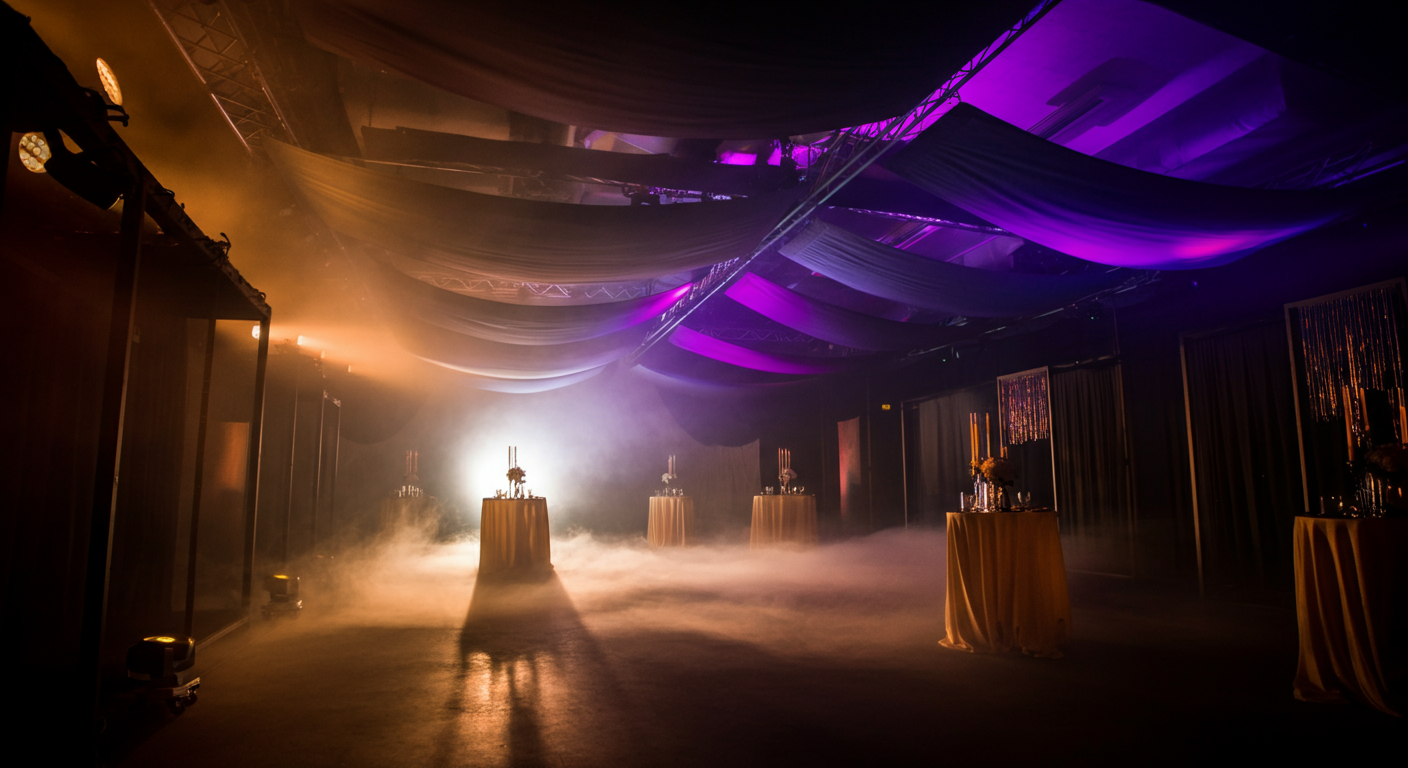
Every event is a sensory environment, whether its designers acknowledge that fact or not. The temperature of the room, the texture of the tablecloth, the ambient sound level, the smell of the catering kitchen’s exhaust’s all of these sensory inputs shape guest experience as powerfully as the visual design. The rise of intentional sensory event design represents a maturation of the industry, a recognition that truly memorable experiences are built across all five senses, not just sight.
Sensory design is not a new concept. Luxury hospitality brands have been engineering multi-sensory environments for decades. What is new is the systematic application of these principles to live events, where the temporary nature of the space and the compressed timeline create both unique challenges and extraordinary opportunities.
The Multi-Sensory Design Philosophy
Traditional event design has been overwhelmingly visual. Designers obsess over color palettes, lighting schemes, floral arrangements, and scenic elements, all of which address a single sense. Multi-sensory design expands the canvas to include sound, smell, touch, and taste as deliberate, designed elements of the experience.
The scientific basis for this approach is compelling. Research in cognitive psychology demonstrates that multi-sensory experiences are encoded more deeply in memory than single-sense experiences. When multiple senses are engaged simultaneously, the brain creates richer, more interconnected memory traces that are easier to recall and more emotionally charged.
This has direct implications for event objectives. Whether the goal is brand recall, emotional connection, learning retention, or social sharing, a multi-sensory approach outperforms a visual-only strategy every time.
The Neuroscience of Sensory Memory
Our senses are not processed in isolation. The brain integrates sensory information through a process called multisensory integration, where inputs from different senses are combined to create a unified perceptual experience. When a scent, a sound, and a visual stimulus are experienced together, the resulting memory is more vivid and more durable than any single input would produce alone.
This is why the smell of sunscreen can instantly transport you to a childhood beach vacation, complete with the sound of waves and the feeling of sand. The sensory inputs were encoded together, and activating one can trigger the entire memory complex. Event designers who understand this mechanism can engineer experiences that create lasting emotional associations with brands, messages, and moments.
Scent Design: The Most Underutilized Sense
Of all the senses, smell has the most direct connection to emotion and memory. The olfactory bulb connects directly to the amygdala and hippocampus, the brain regions responsible for emotional processing and memory formation. This neurological shortcut means that scent bypasses rational analysis and speaks directly to feeling.
In event design, scent can be deployed at multiple scales. A signature scent for the entire venue creates an enveloping atmosphere that distinguishes the space from the outside world. Zone-specific scents can differentiate areas within the event, perhaps a fresh green scent in a networking lounge and warm vanilla in a dessert bar. Scent can even be used to mark moments, with a burst of fragrance accompanying a keynote speaker’s entrance or a product reveal.
Pro Tip: Subtlety is everything in scent design. The goal is for guests to feel different in the space without necessarily being able to identify why. If people are commenting on how strong the smell is, you have overdone it. Work with a professional scent designer who understands diffusion rates and space volume calculations.
Scent Delivery Systems for Events
Modern scent diffusion technology has made event scent design both practical and precise. HVAC-integrated systems can distribute scent evenly throughout a large venue. Standalone diffusers can target specific zones. Scent-infused materials like custom candles, treated fabrics, and scented printed materials offer passive delivery that does not require equipment.
For brand activations, custom scent development creates a proprietary olfactory signature that can extend beyond the event into retail environments, product packaging, and direct mail. This cross-channel scent consistency reinforces brand recognition through a sense that most competitors completely ignore.
Spatial Audio: Designing the Soundscape
Sound design in events typically begins and ends with the AV specification: speaker placement, microphone selection, and music playlist. Spatial audio design goes far beyond this functional approach to treat the entire acoustic environment as a designed element.
A well-designed event soundscape includes multiple layers. The ambient layer establishes the baseline atmosphere, perhaps a low-frequency hum for a technology event or natural sounds for an outdoor-themed activation. The functional layer handles speech intelligibility and music playback. The accent layer adds momentary sonic punctuation: a chime when doors open, a musical sting when a speaker takes the stage, or subtle spatial audio effects that guide attention.
Directional and Immersive Audio
Directional speaker technology allows designers to create distinct audio zones within a single open space. Guests can move from a zone playing ambient music into a zone delivering a brand narrative without physical barriers between them. This invisible architecture of sound creates spatial differentiation that feels magical because it operates below conscious awareness.
Immersive audio formats like Dolby Atmos and L-Acoustics L-ISA enable sound to be placed precisely in three-dimensional space. For product launches or theatrical event moments, sound that moves around and above the audience creates an enveloping experience that flat stereo systems cannot match. The emotional impact of hearing a sound source move from behind you to above you and then down to the stage is visceral and unforgettable.
Texture and Material Selection
Touch is the sense we are least accustomed to designing for in events, yet it operates constantly. Guests are touching surfaces from the moment they arrive: door handles, registration counters, name badges, glassware, chair arms, table surfaces, napkins. Each of these touchpoints communicates something about the quality and character of the event.
Material selection for tactile impact means considering not just how things look but how they feel. Smooth, cool surfaces like marble and metal convey precision and luxury. Warm, textured materials like wood and leather suggest comfort and authenticity. Soft fabrics like velvet and cashmere signal intimacy and indulgence.
The experiential event design process should include a material palette that is curated for tactile consistency. If the event’s visual design communicates warmth and organic beauty, but the chairs are cold metal and the table surfaces are hard laminate, there is a sensory disconnect that undermines the intended atmosphere.
Temperature as a Design Tool
Temperature and airflow are sensory elements that most event planners address purely for comfort. But temperature can be a deliberate design tool. A slightly cooler entry corridor followed by a warmer main room creates a subconscious sense of arrival and embrace. A chilled champagne reception that transitions into a warm, candlelit dinner mirrors the emotional arc of the evening.
Outdoor events can use radiant heaters, misting systems, and shade structures not just as comfort measures but as designed sensory experiences. The warmth of a fire pit in a winter event creates a gathering point that is as much about the sensory experience of warmth as it is about the visual appeal of flames.
Taste as a Design Element
Food and beverage are already central to most events, but treating taste as a designed sensory element means going beyond menu selection to consider how flavor interacts with the event’s other sensory layers.
Flavor can reinforce thematic narratives. An event exploring Japanese design aesthetics might feature umami-forward small bites and sake pairings. A brand launch for an energetic, youthful product might offer bold, spicy, citrus-forward flavors. The taste experience should feel intentionally connected to the visual, auditory, and olfactory environment, not like a separate catering exercise.
Interactive and Performative Food Experiences
The boundary between food service and entertainment is dissolving. Live cooking stations where chefs prepare dishes in front of guests engage sight, sound, and smell before the first bite. Molecular gastronomy presentations create moments of surprise and delight. Custom cocktails mixed to order with theatrical flair transform the bar from a service point into a destination.
For luxury private events, bespoke tasting experiences can be woven throughout the evening as sensory punctuation, surprising guests with unexpected flavor moments that reset attention and create conversational sparks.
Synesthetic Experiences: When Senses Blur
Synesthesia, the neurological phenomenon where stimulation of one sense triggers automatic experience in another, offers a powerful metaphor for event design. While true synesthesia is involuntary and relatively rare, designed synesthetic experiences that deliberately cross-wire senses can create moments of genuine wonder.
Consider an installation where touching different textured surfaces triggers different musical notes. Or a cocktail bar where drinks change color based on the ambient music. Or a room where the lighting shifts in response to the collective noise level of conversations. These cross-sensory interactions surprise guests, spark curiosity, and create shareable moments that extend the event’s reach.
Technology enables increasingly sophisticated synesthetic design. Real-time audio analysis can drive lighting parameters. Pressure sensors in flooring can trigger visual effects. Biometric wearables can translate heart rate into visual displays. The possibilities are limited primarily by imagination and budget rather than by technical capability.
How Senses Trigger Memory: Designing for Recall
The ultimate goal of multi-sensory event design is not sensory overload but sensory coherence. When all sensory inputs align to tell the same story, the resulting experience is both immersive in the moment and memorable afterward.
Memory research suggests that the most effective approach is to create one or two signature sensory moments rather than attempting to design every second of the event across all senses. A single, perfectly crafted moment where scent, sound, visual spectacle, and physical sensation converge will be remembered long after a uniformly pleasant but undifferentiated evening fades from memory.
Pro Tip: Identify the one moment in your event that matters most, the reveal, the toast, the keynote’s climax, and concentrate your multi-sensory design resources there. A perfectly orchestrated thirty-second sensory crescendo is worth more than three hours of moderate ambient design.
The Sensory Takeaway
Smart sensory design extends beyond the event itself through physical takeaways that activate memory. A scented item, a textured keepsake, a flavor that can be recreated at home: these sensory anchors give guests the ability to re-access the event experience long after it ends. When a guest lights a candle with the same scent that filled the event venue, the entire evening comes flooding back in a way that a photo on a phone screen never quite achieves.
Implementing Sensory Design: A Practical Framework
For event professionals looking to incorporate multi-sensory design, start with an audit of your current approach. Map every touchpoint in the guest journey and identify which senses are engaged at each stage. You will likely find that 80% or more of your design effort is concentrated on visual elements, with sound addressed functionally and smell, touch, and taste largely undesigned.
Next, identify the sensory gaps that represent the greatest opportunities. Often, scent and touch offer the highest impact relative to investment because guests are so unaccustomed to encountering intentional design in those channels. Even modest interventions, a signature scent at the entrance, upgraded tactile materials at key touchpoints, can dramatically elevate the perceived quality of the experience.
Finally, ensure sensory coherence. Every sensory input should reinforce the same narrative. If your event’s visual design is minimal and modern, the scent should be clean and architectural, not floral and romantic. If the music is warm and acoustic, the materials should be natural and textured, not sleek and synthetic.
The future of event design belongs to those who understand that human experience is not compartmentalized by sense. It is integrated, holistic, and deeply embodied. Designing for the whole person, not just the eye, is how we create events that transcend the ordinary and become truly unforgettable.
Ready to engage every sense at your next event? Connect with our design team to explore how multi-sensory strategy can elevate your vision from seen to felt.