
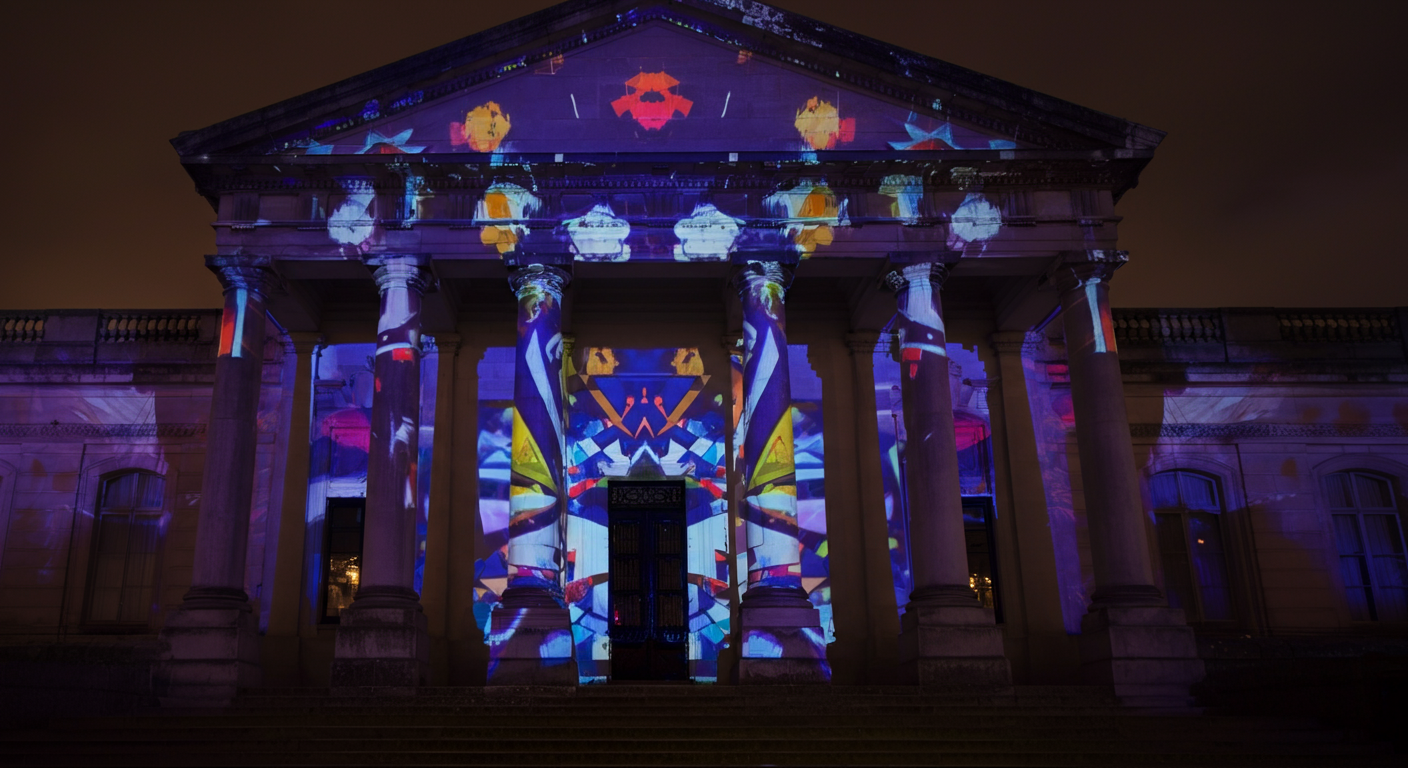
Projection mapping has fundamentally changed what is possible in event design. What was once a niche technology reserved for massive concerts and theme park attractions has become one of the most powerful tools in the experiential event producer’s arsenal, capable of transforming any surface into a dynamic, immersive canvas that captivates audiences and elevates brand storytelling to an entirely new level.
Whether you’re planning a product launch, a corporate gala, or an immersive brand activation, understanding the basics of projection mapping will help you make smarter decisions about when, where, and how to deploy this technology for maximum impact.
What Projection Mapping Actually Is
At its core, projection mapping (also called spatial augmented reality) is the process of projecting video content onto irregularly shaped surfaces so that the imagery aligns perfectly with the physical geometry of the object. Unlike standard projection, which simply throws an image onto a flat screen, projection mapping uses specialized software to warp and blend content so it conforms to architectural features, sculptural elements, stage sets, or even entire building facades.
The result is an optical illusion that makes static surfaces appear to move, transform, shatter, bloom, or dissolve. Done well, it creates a visceral, almost magical experience that no LED wall or printed backdrop can replicate.
How It Differs from Standard Projection
Standard projection requires a flat, white surface and a single projector aimed straight at it. Projection mapping, by contrast, works with any surface geometry. The software analyzes the 3D shape of the target surface, and the content is created specifically to match that geometry. Multiple projectors are often edge-blended to cover large or complex surfaces seamlessly.
How Projection Mapping Works: The Technical Breakdown
Understanding the production pipeline helps you appreciate why projection mapping requires specialized expertise and why timelines matter.
Step 1: Site Survey and Surface Scanning
The production team conducts a detailed survey of the projection surface. This may involve 3D scanning with LiDAR, photogrammetry, or manual measurements. Every column, molding, window frame, and architectural detail is captured. This data becomes the foundation for all content creation.
Step 2: 3D Modeling
Using the survey data, a 3D digital model of the projection surface is built. This model serves as the virtual canvas on which all visual content will be designed and tested before the team ever arrives on site.
Step 3: Content Creation
Motion designers and animators create video content mapped to the 3D model. This is the most time-intensive phase. Content might include branded animations, narrative sequences, abstract visual textures, interactive elements, or all of the above. Every pixel is placed with precision so that when projected, it aligns perfectly with the physical surface.
Step 4: Hardware Setup and Calibration
Projectors are positioned, focused, and calibrated on site. Software like Disguise, Resolume, or MadMapper handles the real-time warping and blending. This calibration process can take several hours for simple setups or multiple days for complex, multi-projector installations.
Step 5: Rehearsal and Refinement
The content is tested on the actual surface, adjustments are made to alignment, brightness, color balance, and timing. This is where the magic comes together and where having experienced technicians makes the difference between stunning and mediocre.
Hardware Requirements
The hardware stack for projection mapping varies dramatically based on the scale of the project, but there are consistent categories you need to understand.
Projectors
Event projection mapping typically requires high-lumen projectors, usually starting at 10,000 lumens for small indoor installations and scaling up to 30,000 to 40,000 lumens per unit for large-scale work. Outdoor projection on building facades may require projectors rated at 50,000 lumens or more. Common professional brands include Christie, Barco, Panasonic, and Epson (for smaller applications).
Media Servers
Media servers are the brains of the operation. They store, process, and output the mapped content in real time. Systems like Disguise (formerly d3), Watchout, and Green Hippo are industry standards for high-end event projection mapping.
Lenses and Rigging
Short-throw and ultra-short-throw lenses allow projectors to be positioned close to surfaces when throw distance is limited, which is common in event venues. Rigging infrastructure, including truss, clamps, and safety cables, must be planned carefully, especially in historic or non-traditional venues.
Understanding Costs: $15K to $150K and Beyond
Projection mapping costs vary enormously based on scope, and understanding the cost drivers helps you budget realistically.
Entry Level: $15,000 to $35,000
At this tier, you’re looking at a single-projector setup mapping onto one defined surface, such as a stage backdrop, a product display, or a branded wall. Content is typically 60 to 90 seconds of looping animation. This works well for product launches, trade show activations, and intimate brand experiences.
Mid Range: $35,000 to $75,000
Multiple projectors, more complex surfaces, longer and more sophisticated content, and potentially interactive elements. This is where most corporate galas, brand activations, and experiential installations land. You might map an entire stage set, multiple walls of a venue, or create an immersive environment within a defined space.
High End: $75,000 to $150,000+
Full-venue transformations, building-facade projections, multi-room immersive experiences, or interactive installations with real-time audience input. Content creation alone at this level can run $30,000 to $60,000. These projects typically require weeks of content development and multiple days of on-site setup and calibration.
Pro Tip: The single biggest cost driver in projection mapping is custom content creation. If budget is a concern, consider commissioning shorter loops of exceptionally high-quality content rather than longer sequences of mediocre animation. Sixty seconds of breathtaking content on repeat will always outperform five minutes of forgettable visuals.
Indoor vs. Outdoor Projection Mapping
The environment in which you deploy projection mapping dramatically affects both the technical requirements and the budget.
Indoor Projection Mapping
Indoor environments offer controlled lighting, which is the single most important factor in projection quality. You can achieve vivid, high-contrast imagery with lower-lumen projectors because you control ambient light. Indoor mapping is ideal for galas, product reveals, corporate presentations, and immersive dining experiences.
The challenge indoors is typically throw distance. Venues with low ceilings or limited space behind the audience require short-throw lenses or creative projector placement, which adds complexity and cost.
Outdoor Projection Mapping
Outdoor projection mapping is inherently more challenging and expensive. You’re competing with ambient light, which means you need significantly more powerful (and more expensive) projectors. Weather is a constant risk factor, requiring weatherproof enclosures and contingency plans. And permitting for outdoor projection, especially on building facades in cities like New York, can be a complex process.
That said, outdoor projection mapping creates spectacle at a scale that nothing else can match. A building facade transformed into a living, breathing canvas is an unforgettable experience that generates massive social media engagement and press coverage.
Venue Suitability: Not Every Space Works
One of the most common mistakes clients make is assuming projection mapping will work in any venue. Several factors determine suitability.
Surface Color and Texture
Projection works best on light-colored, matte surfaces. Dark surfaces absorb light, reducing image brightness and contrast. Highly textured surfaces can create unwanted shadows. Glossy surfaces create hot spots and reflections. If your venue has dark walls, you may need to bring in temporary projection surfaces or dramatically increase projector power.
Ambient Light Control
Can you control the lighting in the space? Windows, skylights, and fixed architectural lighting can all wash out projected content. The more ambient light you can eliminate, the better your projection will look and the less you’ll spend on high-powered projectors.
Rigging Points and Power
Projectors need to be mounted in specific positions relative to the projection surface. Does the venue have rigging points, or will you need to bring in truss? Is there adequate electrical power? A single high-end projector can draw 30 amps or more, and multi-projector setups require dedicated power distribution.
Throw Distance
The distance between the projector and the surface determines the image size and the lens type required. Venues with obstructed sight lines, columns, or balconies can make projector placement extremely challenging.
Integration with Staging and Event Design
Projection mapping reaches its full potential when it’s integrated into the overall event design from the beginning, not bolted on as an afterthought. When projection mapping is part of the design conversation from day one, the stage set, lighting design, scenic elements, and mapped content can work together as a unified experience.
This is where working with a full-service experiential event design team becomes critical. Projection mapping should be conceived alongside scenic design, lighting, audio, and guest flow, not handed off to a separate vendor working in isolation.
Branded Content and Storytelling
For corporate events and brand activations, projection mapping offers a unique opportunity to embed brand messaging directly into the environment. Imagine a product launch where the venue walls transform to reveal the product’s origin story, or a corporate gala where the company’s year-in-review unfolds across the architecture of a historic ballroom.
The key is ensuring that the branded content feels organic to the experience rather than like a PowerPoint projected onto a wall. The best projection mapping tells a story that serves the audience’s experience first and the brand’s messaging second.
Interactive Projection Mapping
Interactive projection mapping uses sensors, cameras, or touch-sensitive surfaces to allow audiences to influence or control the projected content in real time. Guests can trigger animations by walking through a space, touching a surface, or gesturing in front of a camera.
Interactive installations are particularly effective for trade shows, brand activations, and experiential marketing campaigns where audience engagement and dwell time are key metrics. They also generate significant social media content, as guests naturally want to share the experience of interacting with a responsive, immersive environment.
The technology for interactive mapping has matured significantly in recent years, with platforms like TouchDesigner and openFrameworks enabling sophisticated real-time interactivity. However, interactive elements add complexity to both the content creation and on-site technical management, so budget accordingly.
Common Mistakes to Avoid
Having produced dozens of projection-mapped events, we’ve seen the same mistakes surface repeatedly.
Starting too late. Projection mapping content takes time to produce. Starting the content creation process less than four weeks before the event almost guarantees a rushed, compromised result. For complex projects, allow eight to twelve weeks.
Underestimating ambient light. If you haven’t done a site visit at the same time of day as your event, you don’t actually know what the ambient light conditions will be. Always survey the venue during the hours your event will take place.
Choosing the wrong surface. Not every architectural feature makes a good projection surface. Work with your production team to identify surfaces that will yield the most impactful results within your budget.
Ignoring audio integration. Projection mapping without synchronized audio is like watching a movie on mute. Budget for sound design that complements and enhances the visual experience.
Treating it as a standalone element. Projection mapping should be part of a cohesive design vision, not a novelty bolted onto an otherwise conventional event.
Is Projection Mapping Right for Your Event?
Projection mapping is not the right choice for every event. It’s most impactful when you have a venue with compelling architectural features, a budget that allows for quality content creation, adequate time for production, and an event concept that benefits from environmental transformation.
If your goal is to create an immersive, memorable experience that transcends traditional event design, projection mapping is one of the most powerful tools available. But it requires the right venue, the right budget, the right timeline, and, critically, the right production partner.
Ready to explore whether projection mapping is right for your next event? Get in touch with our production team to discuss your vision, your venue, and your budget. We’ll give you an honest assessment of what’s achievable and how to make the most of this extraordinary technology.