
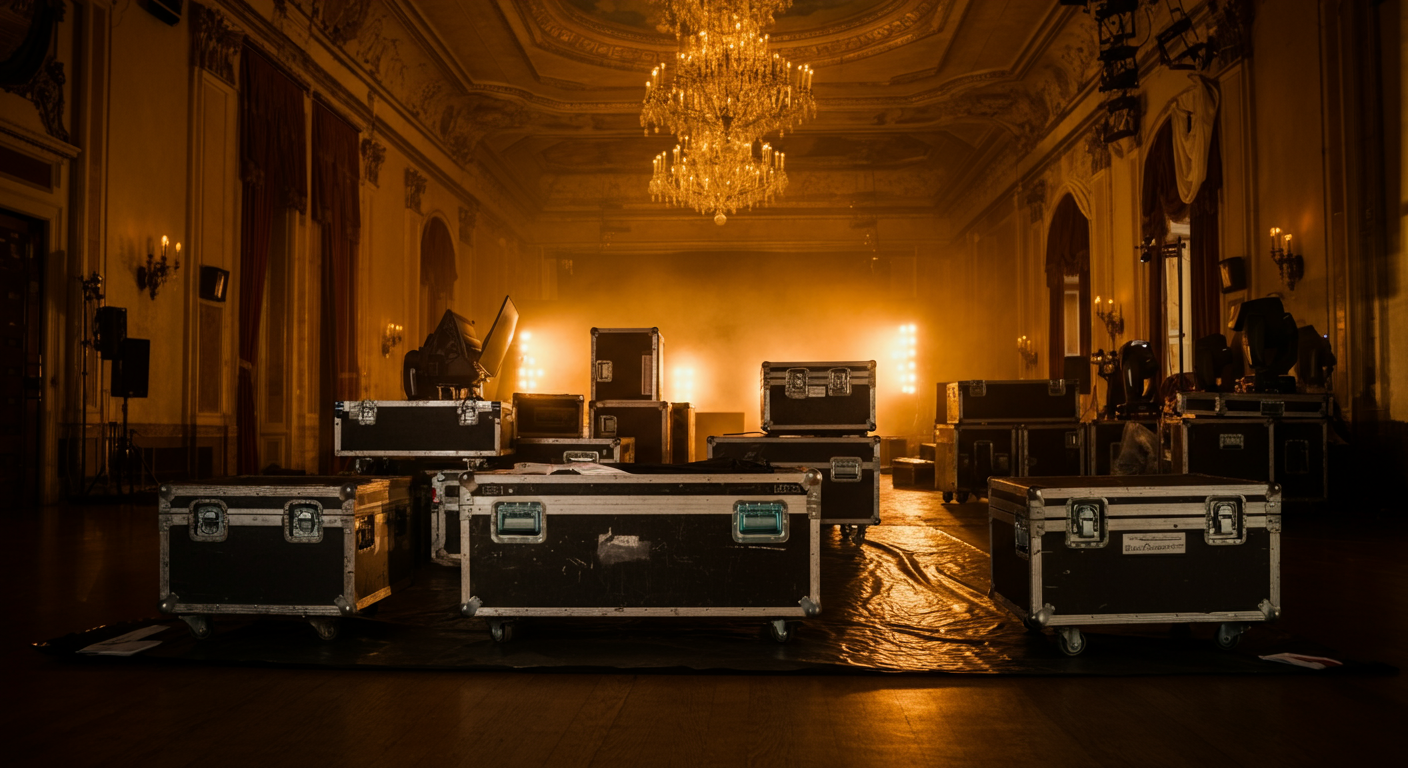
The load-in is where every event either begins its journey toward success or starts falling apart. At historic venues, where priceless architectural details, strict preservation rules, and limited access points collide with the demands of modern event production, the margin for error shrinks to nearly zero. A seamless load-in at a landmarked building requires meticulous planning, deep venue knowledge, and a production team that understands how to deliver extraordinary results within extraordinary constraints.
If you’ve ever wondered why experienced producers obsess over load-in logistics, this guide will make the reasons abundantly clear and give you the practical knowledge to navigate them.
Understanding Historic Venue Restrictions
Historic venues are not warehouses. They are irreplaceable cultural assets with preservation mandates that override every other consideration. Before you can plan a load-in, you need to understand exactly what you’re working with.
Weight Limits and Load-Bearing Capacity
Many historic buildings, particularly those with original wood or marble floors, have strict weight-per-square-foot limits. The New York Public Library’s Astor Hall, for example, has specific load requirements that dictate how heavy equipment can be placed and where it must be distributed. Exceeding these limits isn’t just against the rules; it risks genuine structural damage to irreplaceable architecture.
Before your load-in plan is finalized, obtain the venue’s load-bearing specifications in writing. Map every heavy item, including staging platforms, lighting truss, bars, catering equipment, and AV racks, to specific floor locations and verify that the combined weight in each zone falls within limits.
No Nails, No Screws, No Tape on Surfaces
At most landmarked venues, you cannot penetrate any original surface. No nails in walls. No screws in moldings. No gaffer tape on marble. No clamps on historic railings. Every attachment point must use freestanding structures, weighted bases, or venue-approved mounting systems.
This single restriction has cascading effects on every aspect of production design, from how signage is displayed to how lighting is rigged to how draping is hung. Your production team must design solutions that look intentional and polished while relying entirely on freestanding infrastructure.
Freight Elevator Dimensions
Historic buildings rarely have modern freight elevators. The elevators that do exist are often small by current standards, with low ceilings, narrow doors, and limited weight capacity. At Cipriani 42nd Street, the former Bowery Savings Bank, freight access requires careful sequencing because the elevator can only handle specific dimensions and weights per trip.
Measure every single item that needs to go upstairs. Road cases, truss sections, staging decks, floral installations, furniture, everything. If a piece doesn’t fit in the freight elevator, you need to know that weeks in advance, not on load-in day. Some items may need to be disassembled and reassembled on the event floor. Others may need to come through alternative access points.
Pro Tip: Create a freight elevator manifest that lists every item, its dimensions, its weight, and the order in which it should be loaded. Assign a team member to manage elevator traffic on load-in day. This single step prevents more delays than almost anything else.
Permitting and Approvals
Historic venues typically require multiple layers of approval before load-in can begin, and the permitting timeline is often longer than producers expect.
Venue Approval of Production Plans
Most historic venues require detailed production plans submitted weeks or even months in advance. These plans must include floor plans showing all equipment placement, rigging plans with weight calculations, electrical load requirements, fire safety compliance documentation, and proof of insurance. The venue’s preservation or facilities team reviews everything and may require modifications.
City Permits
Depending on the scope of the event, you may need permits from the city’s fire department, buildings department, or landmarks preservation commission. In New York City, events at landmarked buildings that involve temporary structures, pyrotechnics, or significant electrical loads require FDNY inspection and approval. If you’re loading in from the street, you may need a street closure or standing permit from the DOT.
Certificate of Insurance
Historic venues require comprehensive insurance coverage, often with higher minimums than standard event venues. Your certificate of insurance must name the venue as an additional insured and specifically cover damage to the historic property. This is non-negotiable, and obtaining the proper coverage can take time if your standard policy doesn’t meet the venue’s requirements.
Union Labor Requirements
Many historic venues in New York City and other major markets are union houses, meaning that certain categories of work must be performed by union labor, regardless of which production company you’ve hired.
What This Means in Practice
At union venues, tasks like electrical work, rigging, and sometimes even moving equipment through the building must be handled by the venue’s in-house union crew or by union labor contracted through the venue. Your production team may design and supervise the work, but the physical execution is performed by union hands.
This has significant implications for both budget and timeline. Union labor rates include base pay, overtime, benefits, and pension contributions. Overtime rules are strict: exceeding the standard call time triggers time-and-a-half or double-time rates. And the number of workers required is often dictated by union rules, not by what you think you need.
Planning Around Union Schedules
Union calls typically operate on fixed schedules. A standard call might be 8:00 AM to 4:30 PM, with a mandatory 30-minute meal break. If your load-in runs past the standard call, you’re paying overtime. If you need workers to start before 8:00 AM, that’s also overtime. Weekend and holiday rates are even higher.
Build your load-in timeline around standard call times whenever possible. Front-load the most labor-intensive tasks to the beginning of the call. And always budget for at least two hours of overtime, because load-ins at historic venues almost never finish exactly on schedule.
Protecting Historic Surfaces
Surface protection is not optional at historic venues. It is a contractual obligation and an ethical responsibility. The floors, walls, stairways, and architectural details you’re working around have survived for decades or centuries, and your event must not change that.
Floor Protection
Masonite boards, ram board, or heavy-duty floor protection paper must cover every surface where equipment will be moved or placed. This includes the path from the loading dock to the event space, not just the event floor itself. Rolling heavy cases over unprotected marble or hardwood is a guaranteed way to cause damage and incur significant financial liability.
Wall and Column Protection
Padded corner guards on every column and wall corner along the load-in path. Furniture blankets on any surface where equipment might lean or rest temporarily. And a strict rule: nothing touches an original surface without protection between it and the surface.
Stairway and Elevator Protection
If you’re using stairs or the freight elevator, pad every interior surface. Elevator interiors should be fully draped with moving blankets. Stair railings should be wrapped. Stair treads should be protected with non-slip mats.
Pro Tip: Budget for surface protection as a dedicated line item, not as a footnote buried in your production costs. At a venue like the New York Public Library, proper surface protection can cost $3,000 to $8,000 depending on the scope of the load-in path. It is the cheapest insurance you will ever buy against a damage claim that could run into six figures.
Timeline Management
At a standard event venue, a delayed load-in is an inconvenience. At a historic venue, it can be a catastrophe, because your access window is often rigid and non-negotiable.
The Typical Historic Venue Load-In Window
Most historic venues grant a fixed window for load-in, event, and load-out. This might be a 6:00 AM load-in call for an evening event, with a hard stop for load-out at 1:00 AM. You cannot negotiate an extension at midnight because the venue’s operations staff has gone home and the building’s alarm system is on a timer.
Sequencing the Load-In
The order in which elements load in matters enormously. A well-sequenced load-in follows this general pattern:
Phase 1: Floor protection and infrastructure. Lay floor protection along the entire load-in path. Set up any freestanding rigging structures, staging platforms, and power distribution.
Phase 2: Lighting and AV. Once infrastructure is in place, hang and focus lighting, position projection equipment, and run audio cables. This needs to happen before scenic elements go in, because you need clear sight lines and access.
Phase 3: Scenic and decor. Furniture, florals, draping, signage, and decorative elements come in after technical infrastructure is set. These are the most fragile elements and benefit from going in last when there’s less heavy equipment moving around them.
Phase 4: Catering and bar setup. Food and beverage infrastructure loads in last, closest to event time, especially anything that requires temperature control.
When we produced the Roivant Holiday Gala at the New York Public Library, this kind of disciplined sequencing was essential. The NYPL’s Astor Hall and Celeste Bartos Forum demanded precision timing, careful surface protection, and total respect for the landmarked spaces, all while delivering a stunning, immersive event experience.
Building in Buffer Time
Add 20 percent buffer time to every phase of your load-in timeline. If you think lighting will take three hours, schedule three hours and forty minutes. If scenic needs two hours, block two and a half. Historic venues generate unexpected delays: a freight elevator takes longer than expected, a piece doesn’t fit through a doorway, a union electrician identifies a power concern that needs resolution.
Communication with Venue Staff
Your relationship with the venue’s operations and preservation staff is one of the most important factors in a successful load-in. These are the people who know every quirk of the building, every restriction you might not have anticipated, and every shortcut that could save you time.
Pre-Event Walkthrough
Conduct at least one detailed walkthrough with the venue’s event manager and facilities team before finalizing your production plan. Walk the entire load-in path. Measure every doorway, hallway, and elevator. Identify every electrical panel and note its capacity. Ask about any scheduled building maintenance or other events that might affect your access.
Day-Of Communication
Assign one person from your team as the sole point of contact with venue staff on load-in day. This prevents conflicting requests, reduces confusion, and ensures that any venue concerns are funneled through a single, accountable person who can make decisions quickly.
Backup Plans
At a historic venue, you need contingency plans for scenarios that would be non-issues at a modern event space.
Freight elevator breakdown. If the freight elevator goes down, what is your plan B for getting equipment to the event floor? Can anything be carried up stairs? Is there a secondary elevator that can handle smaller items?
Weather delays. If you’re loading in from an uncovered dock or street, rain can halt operations. Have tarps ready, and adjust your timeline to account for potential weather delays.
Equipment that doesn’t fit. Despite careful measurement, something occasionally doesn’t fit through a doorway or into an elevator. Have a plan for on-site disassembly and reassembly, and make sure the right tools and skilled hands are available.
Power issues. Historic buildings sometimes have electrical systems that are less robust than modern construction. If a circuit trips during load-in, you need a licensed electrician who can diagnose and resolve the issue without delay. Budget for a standby electrician, especially during the first few hours of load-in when power draws spike.
NYC-Specific Considerations
New York City’s historic venues present a unique combination of challenges that producers in other markets rarely encounter.
The New York Public Library requires extensive advance planning, detailed production plans reviewed by multiple departments, and strict adherence to preservation guidelines. Load-in access is limited, and every element must be carefully sequenced through narrow corridors and a historic elevator system.
Cipriani venues (42nd Street, 25 Broadway, South Street) each have their own logistics challenges, from the massive columns at 42nd Street that affect sight lines and equipment placement to the multi-level layouts that require extensive vertical transport planning.
The Plaza Hotel combines the challenges of a landmarked building with the operational complexity of an active luxury hotel. Load-in must work around hotel operations, guest access, and the hotel’s own event schedule.
In all these venues, the common thread is that success depends on experience. Having produced events in these spaces before provides invaluable knowledge that no amount of research can replace.
The Bottom Line
A seamless load-in at a historic venue is the product of weeks of careful planning, clear communication, and deep respect for the space. It requires a production team that understands the unique constraints of landmarked buildings and has the experience to navigate them without compromising the event’s creative vision.
Every spectacular event you’ve ever attended at a historic venue was built on the foundation of a meticulously planned load-in that most guests never see. That invisible infrastructure is what separates professional event production from everything else.
Planning an event at a historic venue and want to make sure every detail is handled with precision? Reach out to our production team to start the conversation. We’ll bring the experience, the relationships, and the obsessive attention to logistics that these extraordinary spaces demand.