
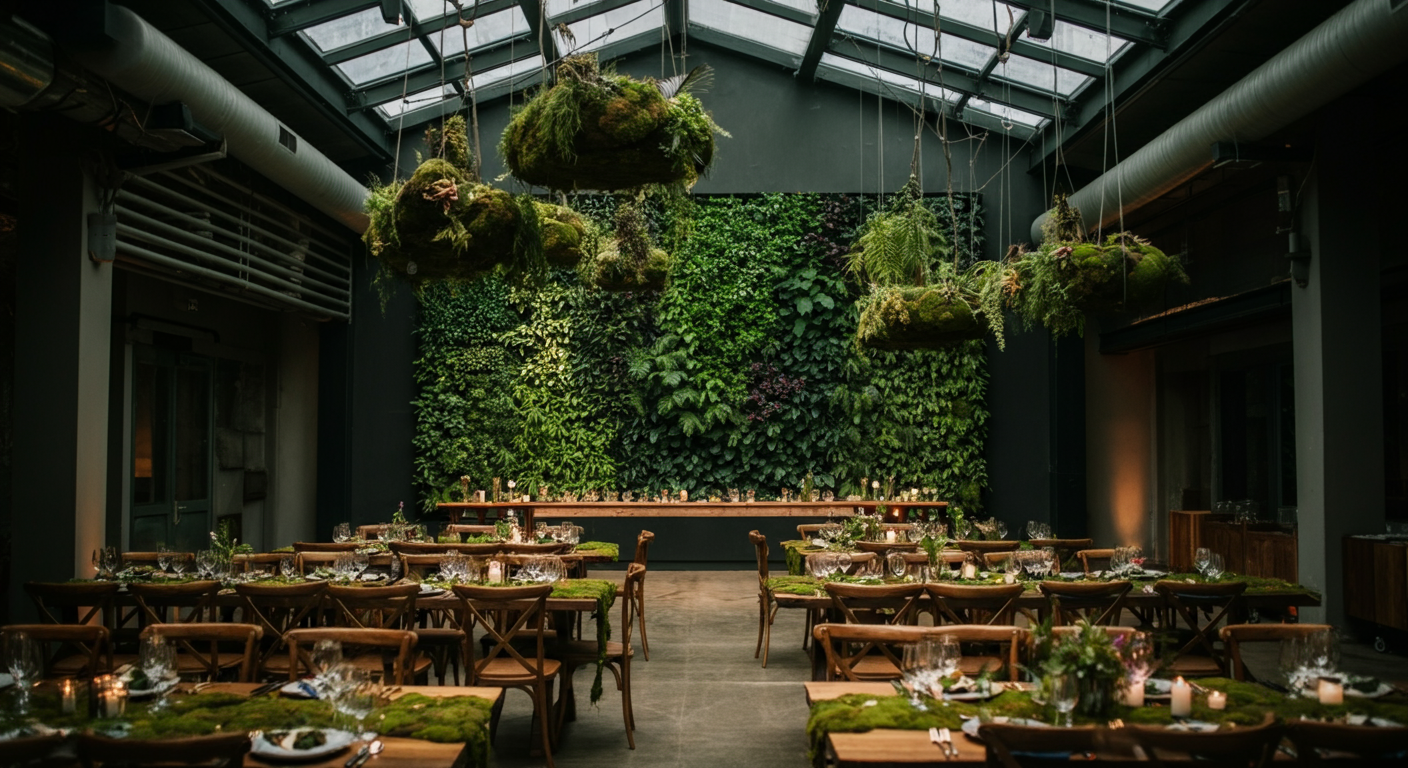
The boundary between the built environment and the natural world is dissolving. Biophilic design’s emergence in event architecture represents one of the most significant shifts in experiential design this decade, moving beyond potted ferns and floral arrangements into fully integrated ecosystems that transform how guests interact with space.
At its core, biophilic design is rooted in the idea that humans possess an innate connection to nature. Coined by biologist E.O. Wilson in 1984, the term “biophilia” describes our deep biological need to affiliate with natural systems. When applied to event design, this philosophy becomes a powerful tool for creating environments that feel both extraordinary and instinctively comfortable.
Understanding Biophilic Design in the Event Context
Biophilic design is not simply about adding greenery to a ballroom. It is a comprehensive design framework that incorporates natural materials, organic forms, natural light patterns, and living systems into architectural spaces. For events, this means rethinking every surface, sightline, and sensory touchpoint through the lens of our relationship with the natural world.
Research from the Human Spaces Report found that environments incorporating biophilic elements can increase well-being by 15% and creativity by 6%. In an event setting, where engagement and emotional resonance are the primary objectives, those numbers translate directly into measurable outcomes for hosts and brands alike.
The Three Pillars of Biophilic Event Design
Effective biophilic event design rests on three foundational principles. First, direct experience of nature: incorporating real plants, water, natural light, and organic materials into the space. Second, indirect experience of nature: using natural colors, textures, patterns, and imagery that evoke the natural world without requiring living elements. Third, spatial configurations that mirror natural environments: creating varied spaces with prospect and refuge, transitional zones, and organic circulation paths.
The most compelling biophilic events weave all three pillars together seamlessly, creating environments where guests feel a profound sense of place without necessarily being able to articulate why.
Living Walls and Vertical Gardens
Living walls have become the signature element of biophilic event design, and for good reason. A floor-to-ceiling installation of living plants creates an immediate visual impact that no printed backdrop or digital display can replicate. The texture, depth, and subtle movement of real foliage engages the eye in a way that feels fundamentally different from manufactured materials.
For event applications, living walls can be constructed as modular systems that are assembled on-site and removed after the event. These typically use a combination of ferns, mosses, succulents, and trailing plants arranged in patterns that range from structured geometric layouts to wild, naturalistic compositions. The choice depends on the event’s aesthetic direction and the brand’s personality.
Pro Tip: When specifying a living wall for an event, always factor in irrigation and drainage logistics. Even for a single-evening installation, plants need adequate moisture, and the last thing you want is water damage to a venue floor. Work with your experiential event design team to engineer these systems properly.
Moss Installations: The Low-Maintenance Alternative
Preserved moss has emerged as a versatile material for event designers seeking biophilic impact without the complexity of living plant care. Preserved moss retains its color and texture for extended periods without water, light, or soil, making it ideal for installations in venues where irrigation is impractical.
Designers are using preserved moss to create everything from branded signage and wayfinding elements to full ceiling installations that transform a conventional ballroom into an immersive forest canopy. Reindeer moss, sheet moss, and mood moss each offer distinct textures and colors, allowing for layered compositions that read as genuinely natural.
One particularly effective application is the moss-covered archway or tunnel entrance, which creates a powerful transitional moment as guests move from the exterior world into the event space. This threshold experience signals that something different awaits inside and primes guests for engagement.
Water Features as Design Elements
Water is one of the most psychologically powerful elements in biophilic design. The sound of flowing water reduces cortisol levels and heart rate, while the visual movement of water surfaces creates a dynamic, ever-changing focal point that holds attention without demanding it.
In event settings, water features range from reflecting pools that mirror architectural elements and lighting to cascading walls that serve as stage backdrops. Some designers are incorporating misting systems that create atmosphere and moderate temperature while adding a sense of mystery and drama.
Floating floral installations on water surfaces combine two biophilic elements into a single stunning feature. Imagine a reception space anchored by a long, narrow reflecting pool dotted with floating botanical arrangements, their colors shifting as programmable lighting changes throughout the evening.
Practical Considerations for Water in Events
Water features in temporary event environments require careful engineering. Waterproofing, pump systems, electrical safety, and load calculations for the weight of water all must be addressed in the production plan. A single cubic meter of water weighs one metric ton, so structural assessment of the venue floor is essential for any significant water installation.
Natural Materials and Tactile Design
The material palette of a biophilic event extends far beyond plants and water. Raw wood, natural stone, linen, wool, cork, clay, and bamboo all contribute to an environment that feels connected to the earth. These materials engage the sense of touch, which is often neglected in event design but profoundly affects how guests perceive a space.
Consider the difference between a registration desk clad in glossy laminate versus one built from live-edge walnut with visible grain and natural imperfections. The latter communicates authenticity, craftsmanship, and warmth before a single word is exchanged. This subtle material language shapes the entire guest experience.
Tables dressed with linen runners over raw wood, bars topped with honed stone, and seating upholstered in natural fabrics all reinforce the biophilic narrative. Even small details matter: wooden name badges instead of plastic lanyards, seed paper for printed materials, and beeswax candles instead of LED votives.
Botanical Centerpieces and Tablescaping
The traditional floral centerpiece is being reimagined through a biophilic lens. Rather than formal arrangements of cut flowers, designers are creating miniature landscapes: terrariums, potted herb gardens, succulent collections, and wild meadow compositions that look as though they were gathered from an actual field.
The trend toward “garden to table” extends to edible centerpieces that double as part of the dining experience. Imagine tables lined with trailing rosemary, thyme, and edible flowers that guests can pinch and add to their plates. This approach transforms passive decoration into interactive engagement.
Indoor Gardens and Immersive Botanical Environments
At the most ambitious end of the spectrum, some events are creating fully immersive indoor gardens that transport guests into entirely fabricated natural environments. These installations might include full-size trees, ground-cover plantings, ambient nature soundscapes, and scent diffusion systems that release the smell of damp earth, fresh rain, or pine forest.
These environments are particularly effective for product launches and brand activations where the goal is to create a transportive experience that generates social media content and lasting memory. A guest who attends an event inside a fabricated enchanted forest will remember that experience far longer than one who attends a conventional reception in a hotel ballroom.
Biophilic Lighting: Circadian and Natural Light Strategies
Lighting is perhaps the most underappreciated element of biophilic design. Our circadian rhythms are calibrated to the shifting color temperature and intensity of natural daylight, and event lighting that respects these biological patterns can dramatically affect how guests feel in a space.
Circadian-aligned event lighting starts with warmer, lower-intensity light during arrival and cocktail hours, mimicking the golden tones of late afternoon. As the evening progresses, lighting shifts through sunset tones before settling into the warm, intimate glow of firelight for dinner and entertainment. This progression feels natural and comfortable, even if guests are not consciously aware of the changes.
Dappled light patterns that mimic sunlight filtering through a forest canopy create visual interest and a sense of organic movement. These can be achieved with gobo projections, perforated screens, or actual branches positioned in front of light sources. The resulting play of light and shadow across surfaces, faces, and tabletops brings a space alive in ways that flat, uniform illumination cannot.
Pro Tip: Avoid the temptation to use green-tinted lighting as a shortcut to a “natural” feel. Green wash on skin looks unflattering and clinical. Instead, focus on warm amber and golden tones that evoke sunlight, and let actual green elements like plants provide the color.
The Sustainability Connection
Biophilic design and sustainability are natural allies, though they are not automatically synonymous. A living wall shipped across the country for a single event generates significant carbon emissions regardless of its visual beauty. Thoughtful biophilic design considers the environmental footprint of every element.
Source materials locally whenever possible. Work with regional growers for plant installations, specify reclaimed or FSC-certified wood, and choose venues that offer natural daylight to reduce artificial lighting requirements. After the event, ensure that living materials are donated, replanted, or composted rather than sent to landfill.
Many clients are drawn to biophilic design precisely because of its sustainability associations, so it is important that the execution genuinely delivers on that promise. Greenwashing through superficial natural aesthetics without substantive environmental consideration will ultimately undermine credibility.
Repurposing and Circular Design
Forward-thinking event designers are developing biophilic installations with their second life in mind from the outset. Potted trees used as scenic elements can be donated to community gardens. Herb centerpieces can go home with guests. Modular moss panels can be reused across multiple events before being composted.
This circular approach transforms the event’s environmental narrative from one of consumption to one of stewardship, which resonates powerfully with audiences who are increasingly attuned to sustainability issues.
Implementing Biophilic Design: Practical Framework
For event professionals looking to incorporate biophilic principles, a phased approach works well. Start with the material palette: swap manufactured surfaces for natural ones wherever budget allows. Next, introduce living elements at key touchpoints, including the entrance, registration area, stage backdrop, and bar. Then layer in sensory elements such as nature sounds, natural scents, and circadian lighting. Finally, consider spatial design: can you create varied zones with different levels of enclosure and openness that mirror natural landscape patterns?
The budget range for biophilic event design varies enormously. Simple interventions like natural material tablescaping and potted plant groupings can be achieved within modest budgets. Full immersive environments with living walls, water features, and custom botanical installations represent a significant investment but deliver proportional impact.
Why It Matters Now
The acceleration of biophilic design in events is not a passing trend. It reflects a fundamental recalibration of what people need from physical spaces in an increasingly digital world. After years of screen-mediated interaction, guests are hungry for environments that feel real, textured, and alive. Biophilic design satisfies that hunger in a way that no amount of LED pixel density or augmented reality ever will.
For brands, the message embedded in a biophilic event environment is equally powerful: we value authenticity, we care about well-being, and we understand that the most memorable experiences are rooted in something deeper than spectacle.
The future of event design is not a choice between nature and technology but a synthesis of both, environments where living systems and engineered systems work together to create experiences that are both extraordinary and deeply human.
Ready to bring biophilic design principles to your next event? Get in touch with our team to explore how natural elements can transform your vision into an immersive, unforgettable experience.