
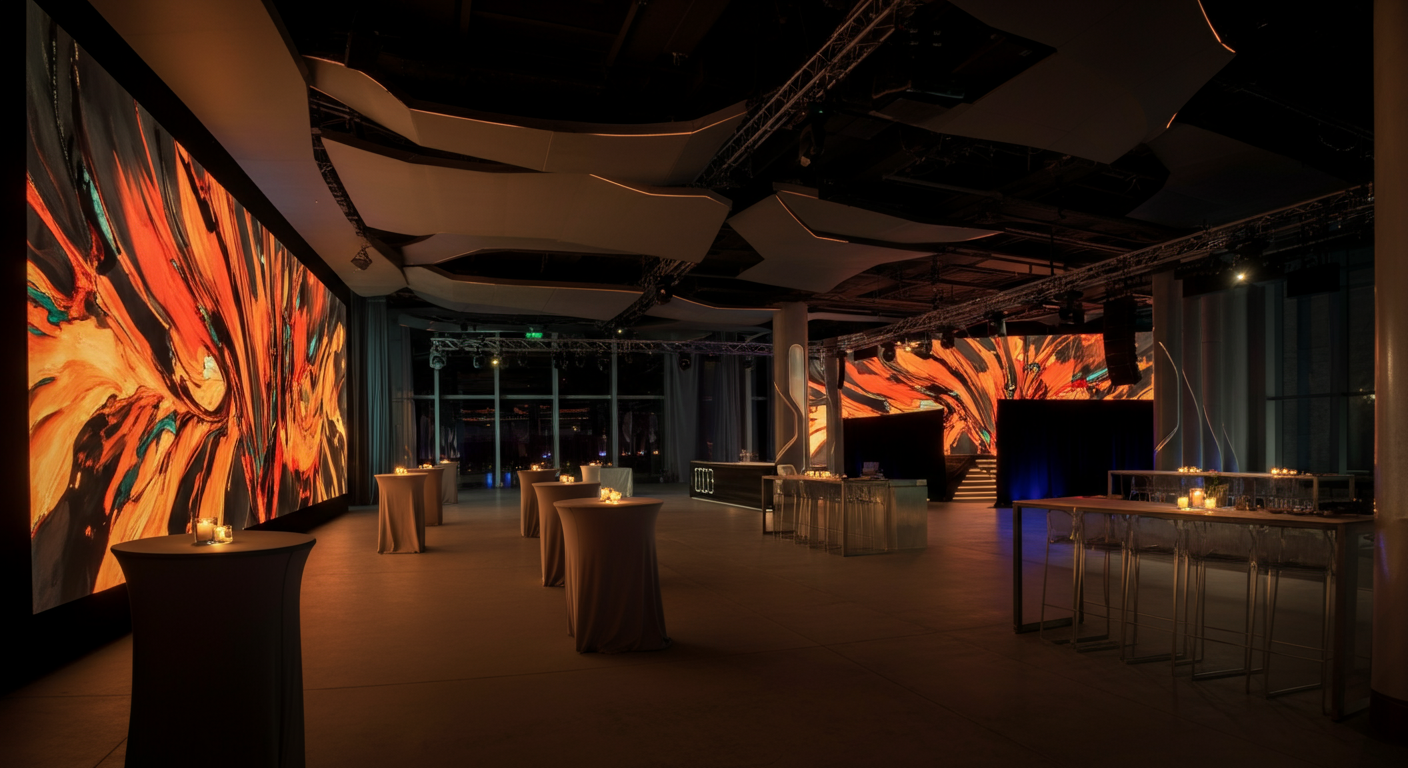
The corporate event landscape in 2026 bears almost no resemblance to the industry of five years ago. What was once defined by convention center keynotes and rubber-chicken dinners has evolved into a sophisticated discipline where architecture, technology, sensory design, and human psychology converge to create moments that genuinely move people. The organizations that understand this shift are not just hosting better events — they are building deeper relationships with their audiences, driving measurable business outcomes, and establishing cultural relevance that extends far beyond the event itself.
At GEO Events, we track these shifts not as passive observers but as active practitioners shaping the field. Here are the fifteen trends defining corporate events in 2026 — and what they mean for organizations serious about impact.
1. AI-Driven Personalization at Scale
Artificial intelligence has moved well beyond chatbot concierges and basic recommendation engines. In 2026, AI is orchestrating entire attendee journeys — from pre-event communications tailored to individual preferences to real-time agenda adjustments based on engagement data. The most sophisticated deployments use machine learning to analyze attendee behavior patterns across multiple touchpoints, creating micro-personalized experiences that feel curated rather than algorithmic. This means different attendees at the same event may encounter different content sequences, networking suggestions, and even environmental conditions. The key distinction: AI should be invisible. The moment an attendee feels they’re interacting with a system rather than an experience, the magic evaporates.
2. Sensory Design as a Core Discipline
Scent, sound, texture, temperature, and taste are no longer afterthoughts — they are design pillars equal in importance to visual aesthetics. Leading event designers now work with sensory strategists who map the emotional arc of an event to specific sensory inputs. A keynote might open with a particular ambient scent profile designed to heighten focus, shift to warmer tones during networking, and introduce cooler temperatures during high-energy segments. The neuroscience is clear: multi-sensory experiences create stronger memories and deeper emotional connections. Organizations that ignore sensory design are leaving half the experiential palette untouched.
3. Sustainability as Non-Negotiable Infrastructure
Sustainability in 2026 is no longer a marketing differentiator — it is table stakes. Attendees expect carbon-offset programs, zero-waste catering, locally sourced materials, and transparent reporting on environmental impact. But the most progressive organizations have moved beyond mitigation to regeneration: events that actively contribute to ecological restoration, community development, or social equity. The shift is also economic. Sustainable practices — reusable modular structures, digital-first collateral, local sourcing — often reduce costs while simultaneously improving brand perception. The organizations still treating sustainability as an add-on line item are increasingly out of step with both their audiences and their own ESG commitments.
4. The Hybrid Model Matures
The frantic pivot to virtual during the pandemic years produced mostly mediocre hybrid experiences. By 2026, the model has matured considerably. The best hybrid events no longer attempt to replicate the in-person experience digitally. Instead, they design distinct but complementary experiences for each audience. In-person attendees get spatial, sensory, and social experiences that cannot be digitized. Remote participants get curated content, interactive tools, and networking formats designed specifically for digital engagement. The result is not one event with two access points but two coordinated experiences sharing a narrative arc. This approach requires more design work, not less — but the reach and data advantages make it worthwhile for large-scale corporate meetings and summits.
5. Intimate Over Massive
The mega-conference is not dead, but it is no longer the default aspiration. In 2026, organizations increasingly favor smaller, higher-touch gatherings — 50 to 200 attendees — where genuine connection is possible. These intimate formats allow for deeper content engagement, more meaningful networking, and higher per-attendee investment in experience quality. The economics are compelling: a 150-person event with exceptional production value often generates more business impact than a 1,500-person event with generic execution. This trend reflects a broader cultural shift toward quality over quantity, depth over breadth, and connection over attendance.
6. Experiential Over Presentational
The era of passive consumption is over. Attendees in 2026 expect to participate, create, and contribute — not just watch and listen. This means replacing 60-minute keynotes with 20-minute provocations followed by facilitated dialogue. It means replacing static exhibition booths with interactive installations. It means designing moments where attendees become co-creators of the event narrative. The most effective experiential event designs blur the line between audience and performer, observer and participant. When done well, attendees leave feeling they were part of something rather than merely present at something.
7. Biophilic Design Integration
Biophilic design — the incorporation of natural elements, patterns, and materials into built environments — has moved from architectural theory to event design practice. Living walls, natural water features, organic material palettes, and circadian-aligned lighting are appearing in corporate events across every category. The research supporting biophilic design is substantial: natural elements reduce cortisol levels, improve cognitive function, and increase reported satisfaction. For multi-day conferences and summits, biophilic environments demonstrably reduce attendee fatigue and improve afternoon session engagement. The practical challenge is execution — living installations require specialized logistics that most production companies are only now learning to manage.
8. Projection Mapping and Spatial Computing
Projection mapping has evolved from a novelty to a core production tool. In 2026, high-lumen laser projectors, combined with sophisticated spatial computing software, allow event designers to transform any architectural surface into a dynamic canvas. Entire venues can shift mood, theme, and visual identity in real time — a capability that fundamentally changes how we think about scenic design. Rather than building elaborate physical sets, designers can project environments that respond to content, music, or even audience behavior. The cost curve has also shifted: what once required six-figure budgets for a single activation can now be deployed at a fraction of that investment.
9. Food as Experiential Design
Catering in 2026 is a design discipline, not a logistics function. The most compelling corporate events treat food and beverage as narrative elements — courses that correspond to thematic shifts, interactive food stations that facilitate networking, and presentation styles that reinforce brand identity. Molecular gastronomy, chef’s table experiences, and culturally specific menus have replaced the generic passed hors d’oeuvres model. Food is also one of the most effective tools for creating shareable social media moments — an artfully plated course or an interactive cocktail station generates organic content that no branded hashtag campaign can match.
10. Wellness Integration
Wellness is no longer confined to a morning yoga session tucked into the pre-conference schedule. In 2026, wellness principles are woven into every aspect of event design: circadian-appropriate lighting, acoustically managed environments, movement-friendly furniture configurations, nutritionally considered menus, and scheduled decompression breaks. The most progressive events incorporate biometric feedback — opt-in wearables that help organizers understand collective energy levels and adjust programming accordingly. This is not about performative wellness. It is about recognizing that human beings perform, connect, and retain information better when their physiological needs are respected.
11. Data-Driven ROI Measurement
The era of measuring event success by attendance numbers and satisfaction surveys is definitively over. In 2026, sophisticated organizations track engagement depth, content interaction patterns, networking quality, post-event behavior changes, and direct business outcomes. RFID, NFC, and spatial analytics provide granular data on how attendees move through and interact with event environments. CRM integration connects event engagement to pipeline velocity and deal closure. The organizations that invest in measurement infrastructure are the ones that can justify — and continuously improve — their event investments. Those that cannot quantify impact will increasingly struggle to secure budget.
12. DEI as Design Framework
Diversity, equity, and inclusion in 2026 events extends far beyond speaker selection and pronoun badges. It is a design framework that influences every decision: venue accessibility, dietary inclusivity, sensory accommodation, content representation, pricing structures, and cultural sensitivity. The most thoughtful organizations engage DEI consultants during the design phase — not as a compliance check but as a creative input that produces richer, more resonant experiences. Events designed through a DEI lens are simply better events. They reach more people, create deeper connections, and reflect the actual diversity of the organizations hosting them.
13. The Rise of Micro-Events
Alongside the trend toward intimacy, micro-events — gatherings of 10 to 30 people designed around a single objective — are proliferating across corporate event portfolios. These might be executive dinners, innovation workshops, client appreciation experiences, or thought leadership salons. Micro-events offer disproportionate ROI because they enable the kind of focused, high-quality interaction that drives real business relationships. They also allow organizations to maintain continuous engagement rather than concentrating all experiential investment into one or two annual tentpole events. The operational challenge is scale: managing a portfolio of 20 micro-events requires different infrastructure than producing two large conferences.
14. Immersive Technology Beyond the Headset
Immersive technology in 2026 has largely moved beyond the VR headset — a device that isolates users and creates logistical bottlenecks at events. Instead, the focus is on shared immersive experiences: room-scale projections, spatial audio environments, augmented reality overlays on physical installations, and interactive surfaces that respond to touch and gesture. These technologies create collective wonder — the shared experience of being inside something extraordinary — without the friction of individual devices. The best implementations are invisible: attendees do not think about the technology; they simply feel transported.
15. Brutalist and Architectural Aesthetics
The dominant visual language of corporate events is shifting away from soft, organic, Instagram-friendly aesthetics toward something more assertive: clean geometries, raw material honesty, dramatic contrast, and architectural precision. This brutalist-influenced approach prioritizes impact over prettiness, substance over decoration. Monolithic structures, dramatic lighting, and restrained color palettes create environments that feel serious, intentional, and unmistakably premium. This aesthetic is particularly effective for technology companies, financial institutions, and luxury brands seeking to project confidence and sophistication. At GEO Events, this architectural approach to event design is central to our creative philosophy — because environments that demand attention create experiences that command respect.
Looking Forward
These fifteen trends are not isolated phenomena. They are interconnected expressions of a fundamental shift in how organizations think about live experiences. The common thread is intentionality — a move away from formulaic event production toward thoughtful, designed, and measured experiences that serve specific strategic objectives.
The organizations that will lead in 2026 and beyond are those that treat events not as logistical exercises but as strategic assets worthy of the same creative rigor applied to product development, brand building, and customer experience.
Ready to explore how these trends can shape your next corporate event? Get in touch with GEO Events to start a conversation about what’s possible.