
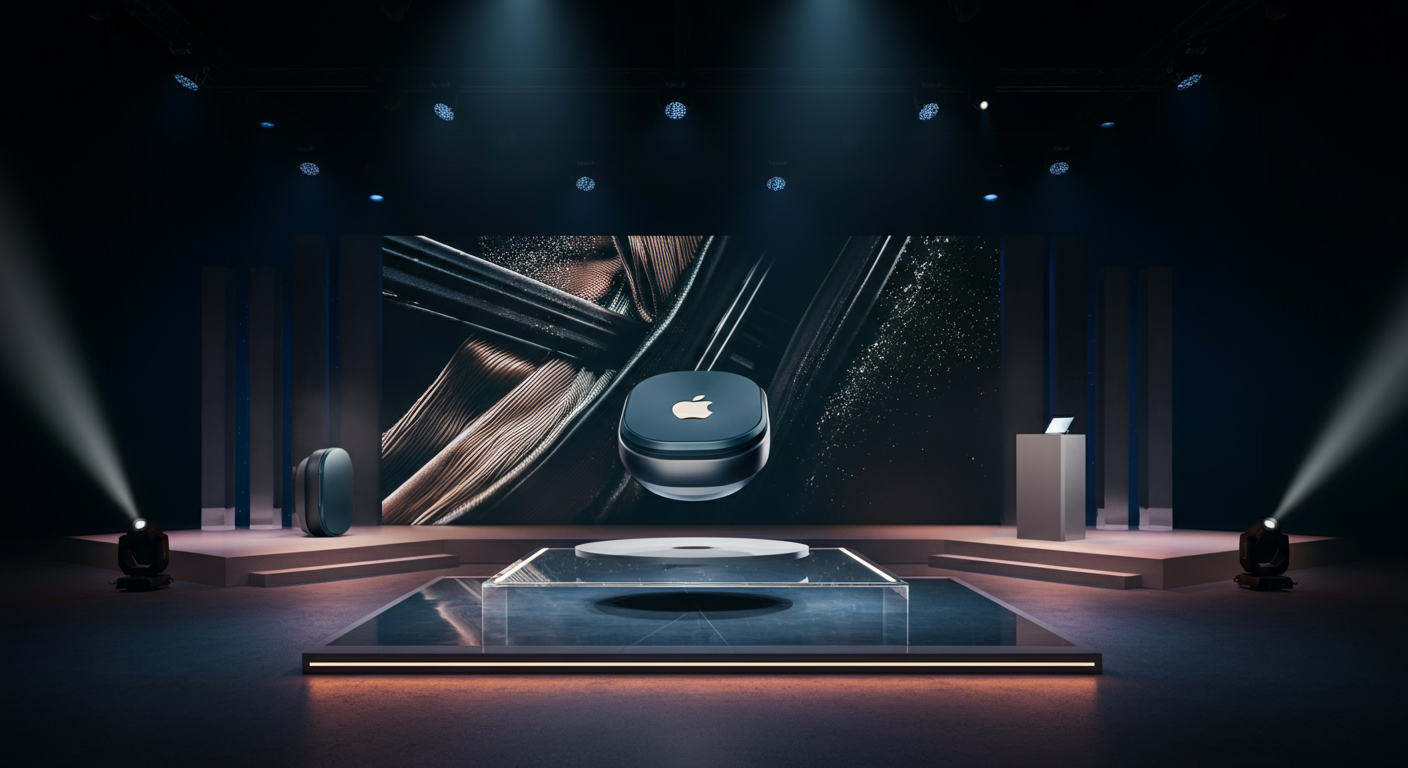
Tech company launch events operate under a fundamentally different set of rules than any other category of live event production. The audience is skeptical by nature, the product must speak for itself, the media coverage will be ruthlessly honest, and the entire experience will be live-streamed to an audience that dwarfs the in-room attendance by orders of magnitude. Getting it right creates cultural moments that define product categories. Getting it wrong becomes a meme within hours.
At GEO Events, we produce product launches and experiential pop-ups for technology companies that understand the stakes. Here’s what works in 2026 — and what the most successful tech brands are doing differently.
How Tech Launches Differ from Every Other Event
Product Demos Are the Main Event
Unlike a fashion show or a gala, the product is the star of a tech launch. Every production decision — lighting, staging, AV, flow — must serve the product demonstration. If guests leave impressed by the venue but unable to articulate what the product does, the event failed. The most successful tech launches create environments where the product is experienced, not just presented. Hands-on demo stations, guided product tours, and interactive installations give attendees a physical relationship with the product that no keynote can replicate.
The Live Stream Is the Primary Audience
In 2026, the in-room audience at a tech launch event is important but secondary. The live stream reaches millions, and the production must be designed for both audiences simultaneously. Camera angles, lighting for broadcast, on-screen graphics, audio mixing for stream, and pacing that works on screen are all primary production considerations — not afterthoughts layered onto an in-person event. The most sophisticated tech launches are essentially broadcast productions that happen to have a live audience.
Media-First Design
Tech journalists and creators attend launch events with a specific mission: capture content that tells the story to their audiences. The production must facilitate this by providing well-lit photo opportunities, designated content creation spaces, product access for hands-on photography and video, and clear narrative throughlines that make the story easy to tell. A tech launch that doesn’t generate strong media content — regardless of how impressive it was in person — underperforms its potential.
Developer-Focused Experiences
For platform and developer tool launches, the audience includes technical users who want to understand specifications, APIs, integration capabilities, and real-world performance. These attendees need dedicated spaces for technical deep-dives, code demonstrations, and direct access to engineering teams. The production must accommodate both the broad consumer-facing presentation and the granular technical exploration, often in adjacent but distinct environments.
The Apple/Google-Style Keynote: Lessons and Evolution
Apple’s launch events established a template that has influenced every tech launch since: a carefully scripted keynote presentation with cinematic production values, followed by a hands-on experience area where media can interact with the product. This format works because it controls the narrative — the keynote delivers the story the company wants to tell, and the hands-on area provides the proof.
But the template has evolved significantly. In 2026, the most effective keynotes are shorter and more focused — 30 to 45 minutes rather than the two-hour marathons of years past. The pacing is faster, reflecting audiences trained by short-form content. And the integration of live demonstrations — real products used on stage in real time, not pre-recorded videos — has become essential as audiences grow more skeptical of polished promotional content.
The hands-on experience area has also evolved. Rather than rows of products on tables staffed by demo specialists, leading tech companies now create narrative-driven demo environments where attendees move through curated experiences that demonstrate product capabilities in context. Think less trade show booth, more immersive exhibition — an approach we explored with our work on the Emily in Paris Immersive Photo Experience, which demonstrated how narrative-driven spatial design creates deeper engagement than passive product display.
Pro Tip: Rehearse live product demonstrations obsessively. Every failed on-stage demo in tech history — and there have been many memorable ones — resulted from insufficient rehearsal time. Budget at least two full days of on-stage rehearsal for any keynote that includes live product demonstrations.
Interactive Demo Stations: Design Principles
The demo station is where purchase intent is created at a tech launch. After the keynote tells the story, the demo station provides the proof. Effective demo station design in 2026 follows several key principles.
Guided Journey, Not Open Floor
Rather than arranging demo stations in a trade show-style grid, design a guided journey that moves attendees through product features in a logical sequence. Each station builds on the previous one, creating a cumulative understanding of the product’s capabilities and value. This approach ensures that attendees experience the full product story rather than cherry-picking features that happen to be nearest the entrance.
Context Over Specs
Demo stations that focus on specifications — processor speed, battery life, resolution — underperform those that demonstrate real-world use cases. Show the product solving actual problems in recognizable scenarios. A laptop demo station that shows a video editor rendering a project in real time communicates performance more effectively than a benchmark score on a screen.
Social-Ready Moments
Every demo station should include at least one element that attendees will want to photograph or record. This might be a dramatic visual demonstration, a before-and-after comparison, or an interactive element with a visually striking output. These social-ready moments extend the reach of your launch beyond the room and the official live stream.
Adequate Staffing
Each demo station needs trained staff who can adapt their presentation to different audience types — from technically sophisticated developers to general media. Understaffing demo areas creates bottlenecks that frustrate attendees and reduce the number of people who experience the product. Plan for one demo specialist per four to six simultaneous users.
AR/VR Integration: What Actually Works
Augmented and virtual reality have matured from novelty gimmicks to genuinely useful launch event tools in 2026. The key is deploying these technologies purposefully rather than as tech-for-tech’s-sake spectacle.
AR works best when it enhances the physical product experience — overlaying real-time data visualization on a hardware product, showing internal components through a device’s exterior, or demonstrating future software capabilities on a current hardware platform. The technology should feel like a natural extension of the product story, not a separate attraction.
VR excels at transporting attendees to environments where the product is used — a construction site for enterprise software, a concert venue for audio products, a surgical theater for medical devices. These immersive context demonstrations create emotional connections to the product’s value proposition that flat presentations cannot achieve.
The production consideration with both technologies is throughput. VR experiences typically accommodate one person at a time and take three to five minutes per session. For an event with 500 attendees, you need enough stations and efficient enough flow to prevent the VR area from becoming a bottleneck that frustrates rather than impresses.
Social Amplification Strategy
A tech launch event’s impact is measured not just by in-room reactions but by the social conversation it generates. Production design plays a direct role in social amplification, and the most successful tech launches in 2026 integrate social strategy into every production decision.
Designate Content Creation Zones
Create specific areas optimized for content creation — well-lit spaces with clean backgrounds, product displays arranged for optimal photography, and enough room for creators to set up cameras and equipment. These zones should be accessible throughout the event, not just during a narrow window.
Real-Time Content Distribution
Provide media and creators with high-resolution assets — product images, key announcement graphics, quote cards, and video clips — in real time during the event. A digital press kit accessible via QR code ensures that the first wave of social content uses professional assets rather than blurry phone photos.
Hashtag and Conversation Architecture
Design a hashtag strategy before the event and integrate it into the physical environment — on screens, signage, and printed materials. Monitor the conversation in real time and surface the best organic content on in-venue displays, creating a feedback loop that encourages more sharing.
Embargo Management
For major product announcements, work with your PR team to structure the embargo timeline so that the live stream reveal and the media embargo lift simultaneously. This creates a coordinated wave of coverage that dominates the conversation rather than a slow trickle of leaks and partial information.
Pro Tip: The most shareable moment at a tech launch is often not the product reveal itself but an unexpected demonstration that surprises the audience. Build one genuine surprise into your keynote — something that wasn’t leaked or previewed — and design the production to amplify the audience’s reaction for the live stream.
Budget Allocation: Where Smart Tech Companies Invest
Tech launch event budgets vary enormously — from six figures for a focused product reveal to eight figures for a global platform launch. Regardless of scale, the allocation pattern for successful launches follows consistent principles.
AV and Production: 35-45% of Budget
The largest budget category should be audio-visual production, including staging, lighting, sound, video, and live streaming. This is where the quality of the experience is determined, and underinvestment here undermines everything else. Prioritize broadcast-quality cameras, professional lighting design, and redundant systems for any live demonstration.
Demo Experience: 20-25% of Budget
The hands-on experience area deserves its own significant budget allocation, separate from the keynote production. This includes demo station construction, product fixtures, interactive technology, staffing, and the spatial design that guides attendees through the experience.
Content and Media: 15-20% of Budget
Photography, videography, live streaming infrastructure, real-time editing, social media content creation, and press kit production represent a significant and often underestimated cost center. This investment pays dividends in the quality and volume of content generated by the event.
Venue and F&B: 10-15% of Budget
Tech launches typically spend proportionally less on venue and food and beverage than other event categories. The venue needs to be appropriate and well-located, and the catering needs to be good, but neither should dominate the budget at the expense of production quality.
Contingency: 5-10% of Budget
Tech launches involve complex, interdependent systems where a single failure can cascade. A meaningful contingency budget — and the willingness to use it — is essential. This covers backup equipment, additional rehearsal time, last-minute production changes, and the inevitable surprises that arise when technology is demonstrated live.
Metrics That Matter to Tech CMOs
The success of a tech launch event is measured by specific KPIs that go beyond attendee satisfaction scores and social media impressions. In 2026, the metrics that matter to technology CMOs include:
Media Pickup Rate: The percentage of invited media who publish coverage within 48 hours of the launch. Target: 75% or higher for tier-one media.
Share of Voice: Your brand’s percentage of the total conversation in your product category during the 72 hours surrounding the launch. This measures whether your event dominated the narrative or got lost in competitor noise.
Demo Completion Rate: The percentage of attendees who completed the full hands-on demo experience. Low completion rates indicate bottlenecks, poor flow design, or insufficient staffing.
Live Stream Engagement: Not just viewer count, but average watch time, peak concurrent viewers, chat engagement rate, and clip sharing. These metrics indicate whether the production held attention or lost viewers after the initial announcement.
Sales Pipeline Impact: For enterprise products, the number of qualified leads generated within 30 days of the launch event. For consumer products, the pre-order or waitlist conversion rate. This is the metric that ultimately justifies the investment.
Earned Media Value: The estimated value of organic media coverage and social conversation generated by the event, compared to equivalent paid media costs. Successful tech launches generate earned media value that exceeds the total event investment by a factor of five to ten.
Common Mistakes in Tech Launch Production
Even well-funded tech launches fail when production teams make avoidable mistakes. The most common errors include over-relying on pre-recorded video instead of live demonstrations, underestimating rehearsal time for complex technical demos, designing for the in-room audience while neglecting the live stream experience, creating demo areas that are visually impressive but functionally bottlenecked, and treating media as audience rather than partners in telling the product story.
The most insidious mistake is allowing the production spectacle to overshadow the product. When attendees and viewers remember the light show but can’t explain the product, the launch has failed its primary objective regardless of how impressive the production was.
Launch Your Product with Impact
A great tech launch event doesn’t just announce a product — it creates a cultural moment that shapes perception, drives media coverage, builds community enthusiasm, and accelerates sales. The production must serve the product story at every level, from the keynote stage to the demo floor to the live stream reaching millions of screens worldwide.
Contact GEO Events to start planning your technology launch event. Our team combines deep production expertise with an understanding of the tech industry’s unique demands — speed, precision, broadcast quality, and the relentless focus on product that separates great launches from forgettable ones.