
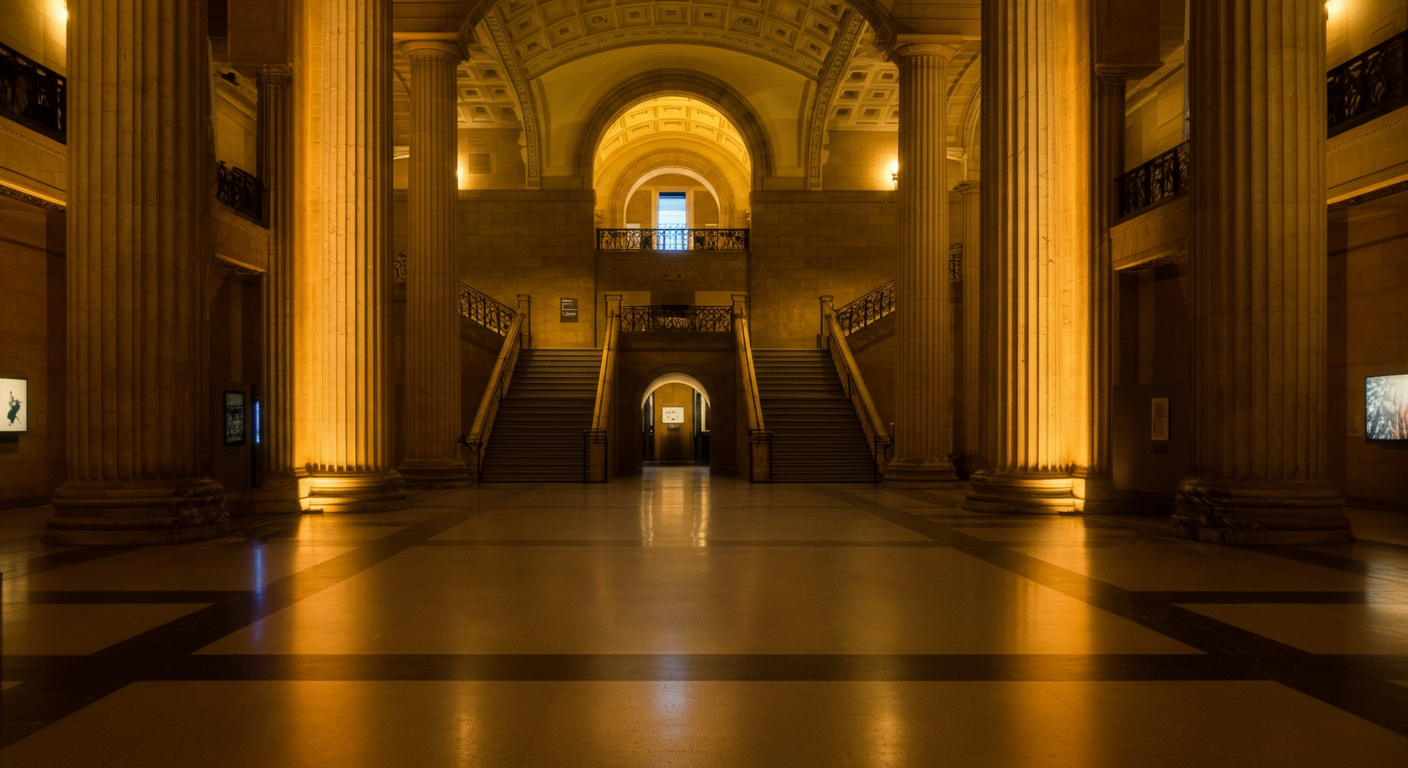
A museum is not a venue. It is a collection with a building wrapped around it, and when you book it for a private event, you are renting the right to operate inside a preservation mandate that has no interest in your run-of-show.
This is the first thing to understand about museum event venues NYC producers court for galas, product launches, and legacy-defining private dinners. The marble is magnificent. The sight lines are unrepeatable. The logistical constraints are unlike any hotel ballroom, restaurant buyout, or industrial loft you have ever loaded into. Producers who miss that distinction tend to find out the hard way, usually around 2 p.m. on install day when a registrar walks the floor with a clipboard and a flashlight.
What follows is a working guide to New York’s cultural institutions as event spaces: which venues are bookable, what they actually charge for, the production constraints that get negotiated (and the ones that never do), and how to tell whether a museum is the right call for your event in the first place.
Why Museums Remain the City’s Most Coveted Private-Event Addresses
A museum confers something a hotel ballroom cannot: cultural legitimacy. When a pharmaceutical company hosts an investor gala inside the New York Public Library’s Astor Hall, the guest experience is not “we had dinner in a venue.” It is “we had dinner at the library.” The address becomes part of the story, and the story becomes part of the brand.
For senior marketers, chiefs of staff, and principals weighing a major event, that distinction matters in three specific ways. First, museums are calibration devices for guest lists: the invitation itself signals the tier of the evening. Second, they produce content that survives the event — photography inside the Temple of Dendur does not age the way a hotel ballroom does. Third, they align cleanly with cause marketing, philanthropic positioning, and the soft-power strategies that Fortune 500 boards now expect from their communications teams.
The trade-off is operational. A museum will give you a room most venues in the city cannot match. It will not give you the freedom you would get almost anywhere else.
The Core Roster: Ten NYC Museums That Host Private Events
Not every cultural institution in the five boroughs is bookable, and among those that are, the policies vary wildly. Below is the working roster producers should know.
The Metropolitan Museum of Art
The Met is the city’s most prestigious museum rental and its most tightly governed. The Great Hall, the Temple of Dendur in the Sackler Wing, the Petrie Court, and the Charles Engelhard Court are the signature spaces. Capacities range from 400 seated in Petrie to 750 seated in Dendur. The Met requires a seven-figure philanthropic relationship or a comparable cultural partnership for most private bookings; this is not a venue you phone-shop. Flash photography is prohibited near works, catering is approved through an in-house list, and the institution’s own event staff runs point on every detail.
The American Museum of Natural History
AMNH offers the Milstein Hall of Ocean Life (under the blue whale), the Rose Center for Earth and Space, the Theodore Roosevelt Rotunda, and the recently opened Gilder Center. The ocean hall remains the most photographed corporate-gala space in the city. Expect strict floor-loading thresholds beneath the whale armature, environmental controls on humidity and temperature in adjacent halls, and AV rigging constraints driven by the suspended specimens overhead.
The Morgan Library & Museum
The Morgan is a different category entirely — intimate, literary, and ideal for seated dinners of 80 to 180. Gilbert Court, the McKim Building’s original rooms, and the historic library itself are the drawing cards. This is where book publishers, private equity firms, and family offices host their most intentional evenings. Security around the collection is extensive. Candles are negotiable only in specific rooms.
The New York Public Library
The Stephen A. Schwarzman Building on Fifth Avenue remains the most photographed private-event venue in New York. Astor Hall, the Celeste Bartos Forum, and the Rose Main Reading Room host galas, product launches, and cultural awards. The library’s tiered rental structure begins in the low six figures and rises quickly depending on spaces activated, closing-hour timing, and union coverage. GEO has produced multiple evenings here, including the Roivant holiday gala at the NYPL, which involved a transformation of Astor Hall into a seated dining environment for several hundred guests without compromising the architecture or the collection security perimeter.
The Solomon R. Guggenheim Museum
The Frank Lloyd Wright rotunda is one of the most recognizable interiors in the world and one of the most difficult to produce inside. The ramp geometry shapes every decision about staging, sightlines, and guest flow. Full buyouts are reserved for institutional partners and a small number of corporate benefactors; capacity for seated dinners in the rotunda tops out around 350.
The Whitney Museum of American Art
The Whitney’s Renzo Piano building offers the largest column-free gallery in Manhattan and a series of outdoor terraces with skyline views. The venue leans contemporary, which means clients tend to be fashion houses, tech launches, and film releases rather than legacy philanthropy. Floor loading is generous relative to older museums; the terraces make the Whitney uniquely suited to seasonal programming.
The Brooklyn Museum
The Beaux-Arts lobby, the Martha A. and Robert S. Rubin Pavilion, and the Great Hall combine to make Brooklyn Museum one of the most flexible large-capacity rentals in the city. The institution is more producer-friendly than its Manhattan peers, which shows up in caterer flexibility and load-in windows. Buyouts accommodate 1,500-plus for receptions.
The Museum of the City of New York
MCNY occupies a Georgian Revival building on Fifth Avenue and Museum Mile’s northern edge. The marble hall, rotunda, and courtyard scale comfortably for dinners of 200 to 400 and shine for civic-facing programming — mayoral events, real estate summits, publishing evenings. Pricing sits meaningfully below the Met and AMNH tiers.
Cooper Hewitt, Smithsonian Design Museum
The Andrew Carnegie Mansion on 91st Street is the rare museum that still feels residential. Cooper Hewitt is made for dinners of 120 to 200 where the design community itself is the audience. The garden expands capacity in warm months. Flash photography restrictions are standard; the collection displayed throughout the house is part of the rental footprint.
The Rubin Museum of Art
The Rubin’s Himalayan art collection and spiral staircase make it a distinctive rental for wellness brands, hospitality launches, and contemplative corporate dinners. The museum announced a shift to a collection-in-residence model, which changes the rental calculus going forward — producers should confirm current availability directly. When available, capacities run from 150 seated to 500 reception.
The Production Constraints That Define the Category
What separates a museum rental from a hotel ballroom is not the architecture. It is the governance. Every museum event lives inside a registrar’s review, and the registrar’s job is to protect the collection — not to make your timeline work. Produce accordingly.
- Art proximity: Most institutions require minimum distances between guests and works (typically 36 to 60 inches), barrier stanchions, and dedicated standby conservators during high-density moments.
- Floor loading: Older buildings have load limits measured in pounds per square foot that make heavy staging, vehicle reveals, and dense seated configurations impossible in specific rooms.
- Flash photography: Prohibited near most works. Professional photography crews need pre-approved lighting plots and often file shot lists in advance.
- Catering approval: Every major NYC museum maintains an approved caterer list. Off-list caterers are rare and typically require six-figure buyouts of the policy.
- Environmental controls: Humidity, temperature, and HVAC adjustments are restricted in galleries adjacent to event space. This affects floral, ice sculpture, cooking stations, and in some cases, guest count.
- Union requirements: Most museums carry IATSE, Teamsters, or stagehand coverage requirements. Labor costs are frequently the second-largest line in a museum budget.
- Closing-hour timing: Load-in typically cannot begin until public hours end, compressing setup into windows of four to six hours before guest arrival.
- Caterer and vendor vetting: Every vendor entering the building is pre-cleared. Same-day substitutions are generally not permitted.
None of this is negotiable in the way producers outside the category are used to. A museum will not bend on collection security. It will bend on timing, design, and programming if you engage with the institution on its own terms — usually six to nine months before the event.
Permits, Insurance, and the Paperwork That Slows Everyone Down
Every museum event requires specialized event liability coverage, typically $2 to $5 million in general liability with the institution named as additional insured. Liquor liability is separate. If you are producing pyrotechnics, open flame, or live cooking, expect additional FDNY permits routed through the museum’s facility office — not directly to the city.
The institutional paperwork stack for a single evening frequently runs to 60 or 70 pages: insurance certificates, vendor COIs, security plans, floor plans stamped by the registrar, catering menus, AV diagrams, and union call sheets. Producers who underestimate the documentation burden are the producers who lose spaces two weeks out.
By the numbers: A mid-size museum gala for 400 guests in Manhattan runs $450,000 to $1.2 million all-in, including venue rental ($75K–$250K), catering ($350–$650 per person), production ($150K–$400K), union labor ($40K–$120K), insurance ($8K–$25K), and institutional philanthropic contribution where required. Load-in windows average 5.2 hours. Strike windows average 3.8 hours. Over 70% of major museum rentals require a board-level or philanthropic touchpoint before the venue will formally hold the date.
Signature Event Types and Pricing Tier Signals
Museums are not interchangeable, and the kind of event you are producing should drive the venue choice more than the address does. A few patterns hold:
Legacy corporate galas and philanthropic anniversaries gravitate to the Met, NYPL, and AMNH. These are the events where the venue itself becomes part of the press coverage. Expect venue costs alone to start in the high six figures before catering.
Product launches and fashion lean toward the Whitney, Guggenheim, and Brooklyn Museum, where contemporary architecture and gallery flexibility accommodate immersive staging. Our brand activation work inside cultural institutions tends to cluster here.
Seated intimate dinners for boards, private equity partner meetings, and family office gatherings belong at the Morgan, Cooper Hewitt, and MCNY. These rooms produce the quality of conversation larger venues cannot.
Cultural programming and media events find natural homes at the Rubin, the Brooklyn Museum, and, increasingly, the Gilder Center at AMNH.
Pricing tier signals to watch: If the institution lists rental rates on its events website, you are in the accessible tier. If a rental inquiry returns a request to discuss “institutional relationship,” you are in the philanthropic tier. If the response requires a board sponsor, you are in the invite-only tier. All three categories exist simultaneously in New York, and producers should calibrate expectations before briefing the client.
When a Museum Is the Right Call — and When It Isn’t
Museums are the right venue for events that need the story the address tells. They are the wrong venue for events that need flexibility, spontaneity, or a forgiving production timeline. A few tests we run with clients before confirming a cultural institution:
- Does the event’s editorial positioning benefit from the venue’s cultural weight? If not, a purpose-built venue like the Glasshouses will outperform a museum on both cost and creative freedom.
- Is the guest list at a tier where a museum invitation registers as meaningful? For C-suite, board, and HNW audiences, yes. For broader marketing-led audiences, the premium is harder to justify.
- Does the creative require vehicles, pyrotechnics, or heavy staging? Most museums cannot accommodate these. A hotel ballroom or landmark hospitality space like Cipriani will serve the creative better.
- Is the timeline longer than six months? Museums require runway. Shorter timelines default to venues with more responsive booking cycles.
For events where the answer to the first two questions is yes and the creative can live within the institution’s constraints, nothing in New York replaces a museum. The room does work that staging cannot.
Producing Inside Cultural Institutions: What GEO Has Learned
We have produced dinners, galas, and activations across New York’s cultural venues long enough to know the patterns. The predictable ones: registrars want to meet the production team in person, not on Zoom. The institution’s in-house events staff are your allies, not your adversaries, and treating them as such unlocks doors that no amount of budget will. Load-in sequencing matters more in museums than anywhere else — the order trucks arrive dictates whether you finish on time.
The less predictable ones: weather contingencies inside open-atrium museums (the Met’s Engelhard Court, the Brooklyn Museum lobby, AMNH’s Gilder Center) have real HVAC implications for guest comfort. Candle smoke triggers conservation sensors that shut down entire wings. Seating charts for board-level galas need to route around collection sightlines that the registrar will flag after the floor plan is final.
The Roivant gala at NYPL was a lesson in all three. The transformation of Astor Hall required a floor plan that preserved collection sightlines, a load-in window calibrated to the library’s closing protocol, and a luxury private event program that held the architectural character of the library without overwhelming it. The outcome was an evening that felt inevitable to the guests and that looked, in photographs, like the library itself had hosted the dinner.
That is the standard to produce toward. When a museum event is done well, the venue absorbs the evening rather than competing with it. When it is done badly, the production fights the building, and the building always wins.
The Short Answer for Producers Weighing a Museum
Cultural institutions remain the most evocative event spaces in New York and the most operationally demanding. They reward clients who understand that they are entering a partnership with a collection-governed institution, not renting a room. They punish clients who treat them like hotel ballrooms with better ceilings.
For senior teams planning a legacy evening, a high-consequence launch, or a philanthropic gala where the address must carry weight, a museum is frequently the right answer. For everything else, New York has better-suited options, and a producer’s job is to say so.
If you are evaluating a museum for an upcoming event and want an honest read on fit, timeline, and total cost before you commit to the inquiry, reach out to the team. We will tell you what the institution will and will not do, and whether it is the right venue for what you are trying to build.