
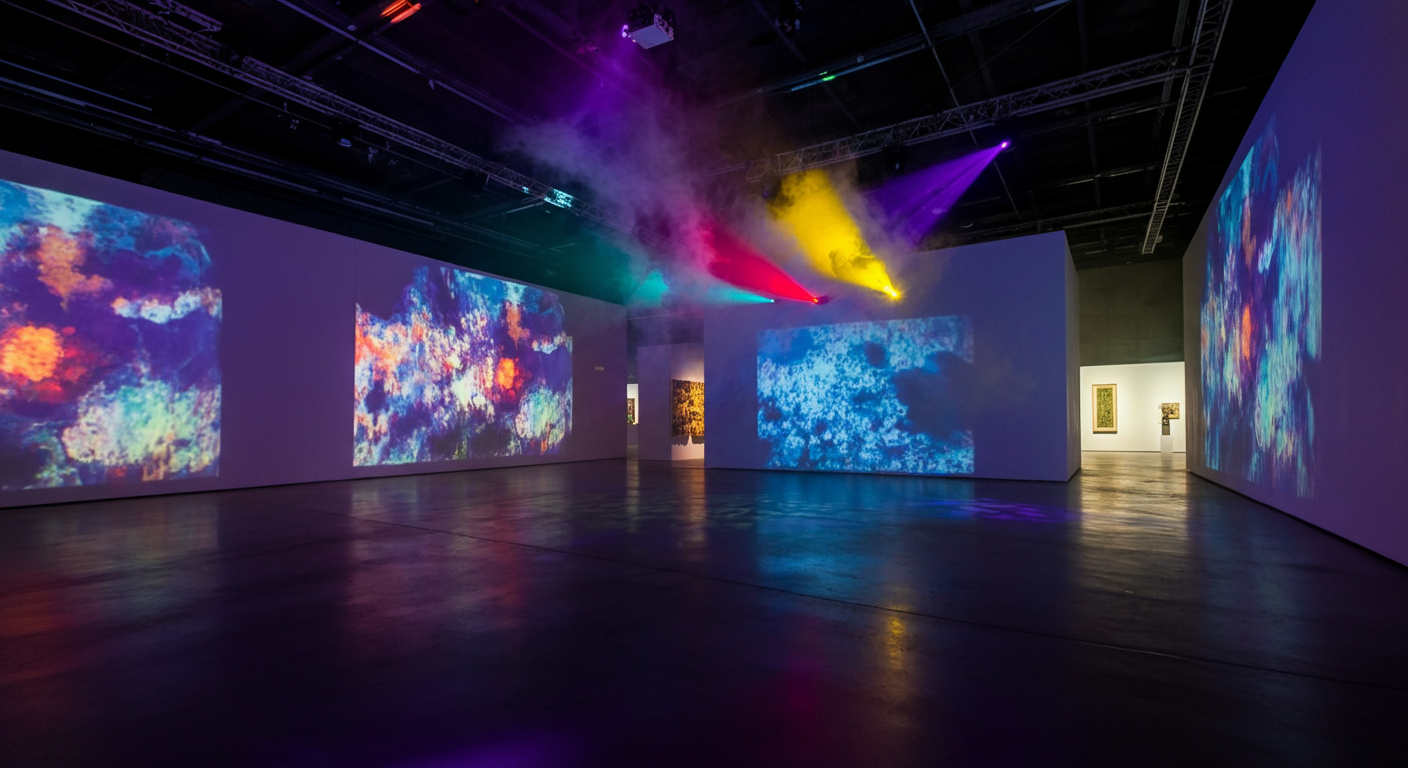
Immersive event design is the single most powerful shift in the experiential industry in the last decade. It is not a trend, a buzzword, or a style preference — it is a fundamental rethinking of how human beings engage with designed environments. Where traditional events decorate a space, immersive events transform it into a living narrative that guests don’t just observe but physically inhabit.
At its core, immersive design is multi-sensory, narrative-driven, and environment-first. It treats every square foot of a venue as a canvas, every moment as a scene, and every guest as a participant rather than a spectator. The result is not merely an event people attend — it is an experience people remember for years.
This framework has been refined through hundreds of productions, from large-scale brand activations at iconic venues to intimate private galas. What follows is the complete architecture behind immersive event design — and why it consistently outperforms traditional approaches in engagement, recall, and emotional impact.
What Makes an Event Truly Immersive
The word “immersive” gets misused constantly. A large floral installation is not immersive. A photo wall is not immersive. Even a beautifully designed ballroom, if it merely serves as a backdrop for speeches and dinner service, is not immersive.
True immersion occurs when the environment itself tells a story, when guests cannot distinguish between “the event” and “the space,” and when every sensory input — sight, sound, touch, scent, even taste — reinforces a singular creative vision. The guest stops being an audience member and becomes a character inside the narrative.
This distinction matters because it changes every decision in the production process. Lighting is no longer about visibility — it is about mood. Sound is no longer about amplification — it is about atmosphere. Scenic design is no longer about decoration — it is about world-building.
The Five-Pillar Framework
After years of producing experiential events across every category — corporate, nonprofit, brand, private — we have distilled immersive design into five interdependent pillars. Remove any one of them, and the immersion breaks. Execute all five in concert, and you create something guests will talk about for years.
Pillar 1: Narrative
Every immersive event begins with a story. Not a theme — a story. The difference is critical. A theme is static: “Old Hollywood Glamour” or “Enchanted Garden.” A story has movement, tension, and transformation. It takes guests from one emotional state to another over the course of the evening.
The narrative does not need to be literal. It does not require actors or scripts. It can be as subtle as a progression from darkness to light as guests move through the space, or as overt as a fully scripted theatrical journey through multiple rooms. What matters is that there is a deliberate emotional arc designed into the experience.
For our Barbie Dream House activation at Cipriani, the narrative was built around transformation — taking an iconic, historically formal venue and reimagining it through a completely unexpected lens. Every design choice served that central tension between classical architecture and pop-culture fantasy. Guests didn’t just see the contrast — they felt it the moment they walked through the doors.
When developing your event narrative, ask three questions: What do guests believe when they arrive? What do we want them to feel at the peak moment? What do they carry with them when they leave? The answers to these three questions become your narrative compass, guiding every production decision that follows.
Pro Tip: Write your event narrative as a single sentence before making any design decisions. If you cannot articulate the story in one line, the concept is not focused enough to drive immersive design.
Pillar 2: Environment
Environment is where most event producers begin and end. But in the immersive framework, environment is not the destination — it is the vehicle for the narrative. Every spatial decision, from floor plan to ceiling treatment, must serve the story you are telling.
This starts with venue selection. The right venue is not simply the most beautiful or the most prestigious — it is the one whose architecture, scale, and character amplify your narrative. A raw industrial loft tells a different story than a grand ballroom. A rooftop with open sky creates a different emotional register than an enclosed black-box theater.
Once the venue is selected, environmental design transforms the space from what it is into what the narrative requires it to be. This means thinking in three dimensions — floors, walls, ceilings — and considering how guests will move through the space over time. Immersive environments are not designed to be photographed from one angle. They are designed to be discovered, explored, and experienced from every vantage point.
Spatial flow is critical. The sequence in which guests encounter different zones of the environment creates rhythm and pacing, just like chapters in a book. A compressed entry corridor that opens into a vast main space creates a sense of revelation. A series of intimate rooms that each reveal a different facet of the narrative creates curiosity and momentum.
Materials and textures play a role that is often underestimated. The difference between a vinyl-wrapped wall and a genuine reclaimed wood installation is not just visual — it is tactile, olfactory, and psychological. Guests may not consciously register these differences, but their bodies do. Authentic materials create authentic immersion.
Pillar 3: Sensory Design
The human brain processes sensory information before it processes language. This is why sensory design is the most powerful — and most overlooked — pillar of immersive events. When you engage multiple senses simultaneously, you bypass the rational mind and speak directly to emotion and memory.
Visual design is the most obvious sensory layer, but it extends far beyond decor. Lighting is the single most impactful design element in any event environment. The same room lit with warm amber wash feels intimate and inviting. The same room lit with cool blue downlighting feels dramatic and edgy. The same room with no visible light sources and only projected imagery feels otherworldly. Master your lighting, and you control the emotional temperature of every moment.
Spatial audio is rapidly becoming a defining element of immersive events. Unlike traditional PA systems that blast sound from a central point, spatial audio places sounds in specific locations throughout the environment. Guests might hear whispered dialogue as they pass a particular installation, or feel bass frequencies rise through the floor in a specific zone. This creates the sensation of a living, breathing environment rather than a decorated room with speakers.
Scent design remains the most underutilized sensory channel in events, which is remarkable given that scent is the sense most directly linked to memory and emotion. Subtle scent diffusion — cedar and leather for a masculine brand environment, jasmine and warm vanilla for a luxury gala, ozone and green notes for a nature-inspired activation — creates an invisible layer of immersion that guests feel without consciously identifying.
Texture and temperature round out the sensory palette. The feeling of walking on moss versus marble, the warmth of a fire installation versus the cool mist of a water feature — these tactile experiences root guests in the physical reality of the world you have built.
Pro Tip: Create a “sensory brief” for every event that specifies the target experience for all five senses. Even if budget limits what you can execute, the exercise of defining the complete sensory vision will improve every design decision.
Pillar 4: Interaction
Immersion without interaction is a museum exhibit. True immersive events give guests agency — the ability to make choices, discover hidden elements, and shape their own experience within the designed environment.
Interaction can be high-tech or no-tech. A motion-responsive projection wall that reacts to guests’ movements creates a sense of magical responsiveness. But so does a beautifully designed cocktail station where guests blend their own signature drinks with guidance from a mixologist. The key is that the guest’s action produces a meaningful response from the environment.
The best interactive elements feel natural rather than forced. Nobody wants to be handed a tablet and told to “engage with the experience.” Instead, the environment should invite interaction through intuitive design. A glowing door invites opening. A path that branches invites choosing. A surface that responds to touch invites exploration.
Brand activations have driven much of the innovation in interactive event design, because brands need guests to do more than admire — they need guests to engage with the product, the message, and each other. The most successful activations create what we call “shareable moments” — interactions that are so delightful, surprising, or visually striking that guests instinctively reach for their phones. But the interaction itself must be genuinely rewarding, not merely performative. If the only point of the interaction is to create social content, guests will sense the manipulation and disengage.
Interactive installations powered by technology — projection mapping that responds to movement, AI-driven personalization, RFID-triggered experiences — are increasingly accessible and increasingly impressive. But technology should always serve the narrative, never replace it. The question is never “What cool technology can we use?” but rather “What interaction would deepen the guest’s connection to the story we are telling?”
Pillar 5: Memory
The final pillar is the one that determines whether your event lives beyond the evening itself. Memory design is the deliberate engineering of moments that encode themselves in long-term memory — the moments guests will describe to friends, post on social media, and recall vividly months or years later.
Neuroscience tells us that memories are strongest when they are attached to strong emotion, sensory richness, and novelty. This is why the previous four pillars matter so much — they create the conditions for powerful memory formation. But memory design goes further by identifying and amplifying the specific peak moments that will anchor the entire experience in guests’ minds.
The “peak-end rule,” established by psychologist Daniel Kahneman, tells us that people judge an experience primarily by its most intense moment and by how it ends. This means you should invest disproportionately in one transcendent peak moment — a reveal, a performance, a surprise — and in the final impression guests carry as they exit.
Physical takeaways also serve memory design, but they must be meaningful rather than transactional. A branded tote bag is forgettable. A hand-printed art piece created during the event, a small object that connects to the narrative, or a personalized artifact that recalls a specific moment — these become memory anchors that keep the experience alive long after the night ends.
Immersive vs. Traditional: Why the Shift Matters
Traditional event design treats the environment as a backdrop for content. The stage is where the action happens. The tables are where guests sit. The decor makes it look nice. This model works — but it caps engagement at a certain level because guests remain passive observers for most of the evening.
Immersive design flips this model. The environment is the content. Every corner of the space is active. Guests are in motion, discovering, reacting, and participating throughout the evening. The result is dramatically higher engagement, longer dwell time, stronger emotional connection, and — critically for brands and nonprofits — significantly higher conversion and fundraising outcomes.
Research consistently shows that multi-sensory experiences are recalled at rates 70% higher than single-sense experiences. For brands, this translates directly to message retention and purchase intent. For nonprofits, it translates to deeper donor connection and larger gifts. For private celebrations, it means the difference between “that was lovely” and “that was the most incredible night of my life.”
Technologies Driving Immersive Design Forward
While technology is never the starting point, it is increasingly the enabler of experiences that would have been impossible even five years ago.
Projection mapping allows any surface — a building facade, a dining table, a custom scenic wall — to become a dynamic, animated canvas. High-lumen projectors with precise mapping software can transform a venue in seconds, creating the illusion of walls dissolving, environments shifting, or objects coming to life.
Spatial audio systems like d&b Soundscape and L-ISA place sound objects in three-dimensional space, creating environments where audio moves around and through the room rather than emanating from static speaker positions.
Interactive installations powered by cameras, sensors, and real-time processing allow environments to respond to guests’ presence and movement. Floors that ripple with projected water as guests walk across them, walls that bloom with digital flowers when touched, and lighting that shifts color based on the collective energy in the room.
LED volume technology, adapted from film production stages, creates photorealistic virtual environments that surround guests with imagery indistinguishable from reality. A ballroom in Manhattan can become a tropical beach, a starfield, or an abstract art installation — all within the same evening.
Scent diffusion systems have evolved from crude air fresheners to precision instruments that can deliver different scents to different zones of a space, change scents on a timed schedule, and modulate intensity based on occupancy and airflow.
Putting the Framework Into Practice
The five-pillar framework is not a checklist — it is an integrated design methodology. In practice, the pillars overlap and reinforce each other constantly. The narrative shapes the environment, the environment enables sensory design, sensory design invites interaction, and interaction creates memory.
The most common mistake is treating immersive design as an add-on to a traditional event plan. You cannot bolt immersion onto a conventional gala by adding a photo booth and some uplighting. Immersion must be the starting premise — the organizing principle from which every other decision flows.
This requires a different kind of creative process. Instead of starting with logistics (venue, catering, timeline), start with the experience you want to create. Define the narrative. Describe the sensory world. Map the guest journey from arrival to departure. Only then do you begin translating the vision into production plans, vendor selections, and budgets.
The investment in immersive design pays for itself in impact. Events that fully commit to this framework consistently generate higher social media engagement, stronger brand recall, more enthusiastic guest feedback, and — for organizations with measurable goals — better business outcomes than traditionally designed events of equivalent budget.
Start Building Your Immersive Experience
Whether you are planning a brand activation that needs to stop people in their tracks, a corporate gala that needs to feel unlike anything your industry has seen, or a private celebration that deserves to be extraordinary — the immersive framework gives you the architecture to make it happen.
The best immersive events begin with a conversation about vision, not logistics. Reach out to our team to start that conversation. We will help you define the narrative, design the sensory world, and produce an experience your guests will never forget.