
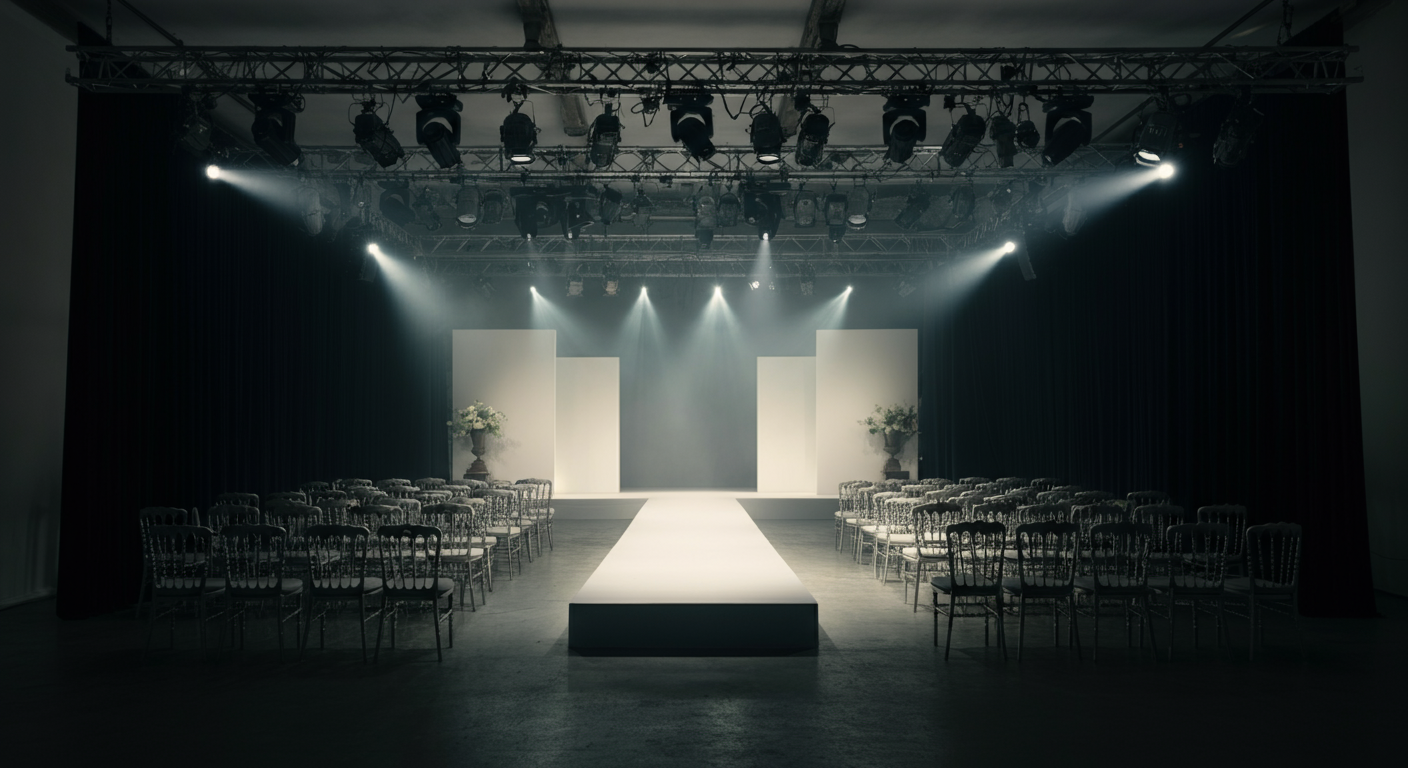
Fashion Week is the most compressed, high-stakes production environment in the events industry. In the span of eight days, hundreds of shows, presentations, activations, and after-parties materialize across New York City — each one built, executed, and struck within a window that would make most corporate event planners question their career choices. What the audience sees is 12 minutes of models walking a runway. What they don’t see is months of planning, weeks of coordination, and a 72-hour build cycle that pushes production teams to their limits.
At GEO Events, our brand activation and experiential design teams have worked alongside fashion houses, beauty brands, and media companies during NYFW for years. Here’s what actually happens behind the scenes.
The NYFW Timeline: From Concept to Runway
6-8 Months Out: Concept and Venue
Fashion Week production begins long before the first model is cast. Six to eight months ahead, design houses and their production partners begin conceptualizing the show — not just the collection presentation, but the total environment. The venue selection process is intensely competitive, with prime spaces like Spring Studios, Skylight at Essex Crossing, and Cipriani being locked down months in advance by brands with established relationships and significant budgets.
The venue isn’t just a container for the show — it’s a storytelling device. A raw industrial space communicates something different than a gilded ballroom. A waterfront warehouse says something different than a Times Square rooftop. Every aspect of the location contributes to the narrative the designer wants to build around their collection.
3-4 Months Out: Design and Technical Planning
With the venue secured, the production design phase intensifies. This is where the runway layout, seating configuration, lighting design, sound system spec, and backstage infrastructure are planned in exhaustive detail. For major shows, this involves architectural-grade renderings, structural engineering reviews, and technical riders that specify everything from electrical capacity to rigging points.
Seating charts at Fashion Week are a diplomatic exercise. The front row is a carefully curated statement — editors, celebrities, key buyers, and influencers arranged in an order that communicates the brand’s priorities and relationships. Every seat assignment is intentional, and changes continue right up to the day of the show.
2-4 Weeks Out: Vendor Coordination
The production team coordinates with dozens of vendors — lighting designers, sound engineers, set builders, florists, caterers, security firms, transportation companies, and AV technicians. Each vendor receives detailed specifications, load-in schedules, and technical requirements. The coordination is military in its precision because the margin for error during Fashion Week is essentially zero.
72 Hours Before: The Build
The 72-hour build cycle is where Fashion Week production becomes genuinely intense. Sets that took months to design must be constructed, lit, and tested in three days — sometimes less. Production crews work in shifts around the clock, with project managers overseeing the sequencing of set construction, lighting installation, sound testing, and rehearsals.
The build sequence is carefully choreographed. Set construction comes first, followed by lighting rigging, then sound installation, then decor and finishing touches. Any delay in one phase cascades through the entire schedule. Experienced production teams build buffer time into their schedules, but the reality of Fashion Week is that buffers are consumed quickly.
Pro Tip: The most successful Fashion Week productions invest disproportionately in pre-production planning. Every hour spent in detailed technical planning saves three to four hours during the build. Detailed CAD drawings, electrical schematics, and minute-by-minute load-in schedules transform the build from chaotic to controlled.
Anatomy of a Runway Show
The Venue
Fashion Week venues range from purpose-built show spaces at official NYFW locations to unconventional spaces that brands commandeer for a single presentation. The venue must accommodate four distinct zones: the front-of-house seating area, the runway itself, the backstage production area, and the media/press area. Each zone has different requirements for lighting, power, climate control, and access.
The Staging
Runway design has evolved far beyond the simple elevated walkway. Modern Fashion Week runways incorporate moving elements, projection surfaces, water features, living plant installations, and architectural structures that transform the walking surface into a design statement. The runway surface material — mirror, concrete, fabric, glass, water — is selected to complement the collection and create specific visual and auditory effects as models walk.
The Lighting
Lighting is arguably the most critical production element of a runway show. It must accomplish multiple objectives simultaneously: illuminate the garments accurately so editors and buyers can see fabric, color, and construction; create the atmospheric mood the designer envisions; provide sufficient brightness for photography and video; and manage the transition between segments if the show has multiple acts. A typical Fashion Week runway show requires 150 to 300 lighting fixtures, controlled by a lighting designer who programs and runs the show live.
The Sound
The soundtrack of a runway show is curated as carefully as the collection itself. Sound designers work with the creative director to develop a audio experience that reinforces the collection’s narrative — from the ambient sound as guests are seated through the show music to the post-show atmosphere. The sound system must deliver consistent audio quality across a space that is often architecturally challenging, with hard surfaces that create reflections and dead spots.
The Backstage
Backstage at a runway show is a self-contained operation with its own infrastructure requirements. Hair and makeup stations, garment racks, steaming stations, dressing areas, model lineup zones, and a stage management station all occupy a space that is typically smaller than the front-of-house area. The backstage team — hair stylists, makeup artists, dressers, stage managers, and show callers — operates with choreographed precision, particularly during shows with quick changes where models must transition between looks in under 90 seconds.
The Press Infrastructure
Media coverage is the primary purpose of most Fashion Week shows, which means press infrastructure is planned with the same rigor as the creative elements. Photographer risers at the end of the runway, designated press seating, live-streaming camera positions, social media content creation areas, and post-show press access all require advance planning. In 2026, the live-streaming infrastructure has become as important as the in-person press setup, with multiple camera angles, real-time editing, and simultaneous distribution to platforms that reach audiences of millions.
Beyond the Runway: Brand Activation Lounges
The runway show is the marquee event, but Fashion Week’s brand activation lounges have become equally important for sponsors, beauty brands, and lifestyle companies seeking to connect with the fashion audience. These spaces — typically adjacent to or near official show venues — create immersive brand experiences that engage attendees between shows.
The most effective Fashion Week activations create genuine value for guests rather than simply broadcasting brand messages. Complimentary beauty services, exclusive product previews, curated refreshments, and social media-worthy installations draw traffic and generate organic content. The key is understanding that Fashion Week attendees are sophisticated consumers who recognize and resist overt marketing but respond to experiences that enhance their day.
Our work on projects like the Barbie Dream House at Cipriani demonstrates how immersive brand environments can generate massive engagement when the experience is designed with the audience’s desires — not just the brand’s message — at the center.
The After-Party Circuit
Fashion Week after-parties serve a specific business function despite their social veneer. They provide designers with a less formal environment to connect with editors, buyers, and celebrities; they give sponsors additional brand exposure; and they create content opportunities that extend the conversation beyond the runway show itself. Production requirements for after-parties include venue transformation (often repurposing the show space), DJ and entertainment booking, VIP area management, branded bars, and step-and-repeat installations for arrivals photography.
The best after-parties create an atmosphere that feels exclusive without being exclusionary, energetic without being chaotic, and branded without being corporate. It’s a delicate balance that requires experienced event production teams who understand both nightlife dynamics and brand stewardship.
Fashion Brands vs. Corporate Clients: A Production Perspective
Working with fashion brands during NYFW is fundamentally different from producing corporate events, and understanding these differences is crucial for production teams that operate in both worlds.
Decision-Making Structure
Fashion houses often have a single creative director whose vision drives every production decision. This can mean faster creative decisions but also late-stage changes driven by evolving creative instincts. Corporate clients typically involve larger stakeholder groups with more structured approval processes — slower but more predictable.
Timeline Tolerance
Fashion clients are accustomed to compressed timelines and expect their production partners to deliver exceptional work under extreme time pressure. The 72-hour build cycle is accepted as normal. Corporate clients generally plan further ahead and expect more structured timelines, though major product launches can approach Fashion Week-level intensity.
Aesthetic Standards
Fashion clients often have highly specific and uncompromising aesthetic standards that extend to details most corporate clients wouldn’t notice — the exact shade of a wall surface, the color temperature of lighting, the texture of a seat cushion. The production team must be prepared to pursue these details to a level that can feel obsessive but is essential to the designer’s vision.
Budget Dynamics
Fashion Week budgets range dramatically — from emerging designers working with five-figure budgets to luxury houses spending seven figures on a single show. The production challenge is delivering the desired impact at whatever budget level the client brings. Experienced Fashion Week producers know how to allocate resources to maximize visual impact, focusing budget on the elements that cameras and guests actually notice.
Pro Tip: The skills developed in Fashion Week production — speed, precision, aesthetic excellence under pressure, and the ability to solve problems in real time — translate directly to high-stakes corporate event production. If your production partner has Fashion Week experience, they can handle anything your corporate event requires.
The Future of Fashion Week Production
Fashion Week production continues to evolve as the industry grapples with sustainability concerns, digital-first distribution, and changing audience expectations. Hybrid show formats — combining in-person runway presentations with immersive digital experiences — have become standard rather than experimental. Sustainable production practices, including reusable set components, carbon-offset programs, and local sourcing, are increasingly expected by brands and their audiences.
The most forward-thinking production companies are investing in technologies that enhance both the in-person and digital experience — volumetric capture, real-time 3D rendering, AR-enhanced viewing, and AI-assisted lighting design. These tools don’t replace the fundamentals of great production, but they expand the creative possibilities and the reach of every show.
Bring Fashion Week Production to Your Next Event
You don’t need to be a fashion house to benefit from Fashion Week-caliber production. The same principles — immersive environment design, precision technical execution, and relentless attention to detail — elevate corporate launches, brand activations, galas, and private celebrations to a level that leaves lasting impressions on every guest.
Contact GEO Events to bring fashion-grade production to your next event. Our team brings the speed, creativity, and technical expertise of Fashion Week to every project we produce — regardless of industry or scale.