
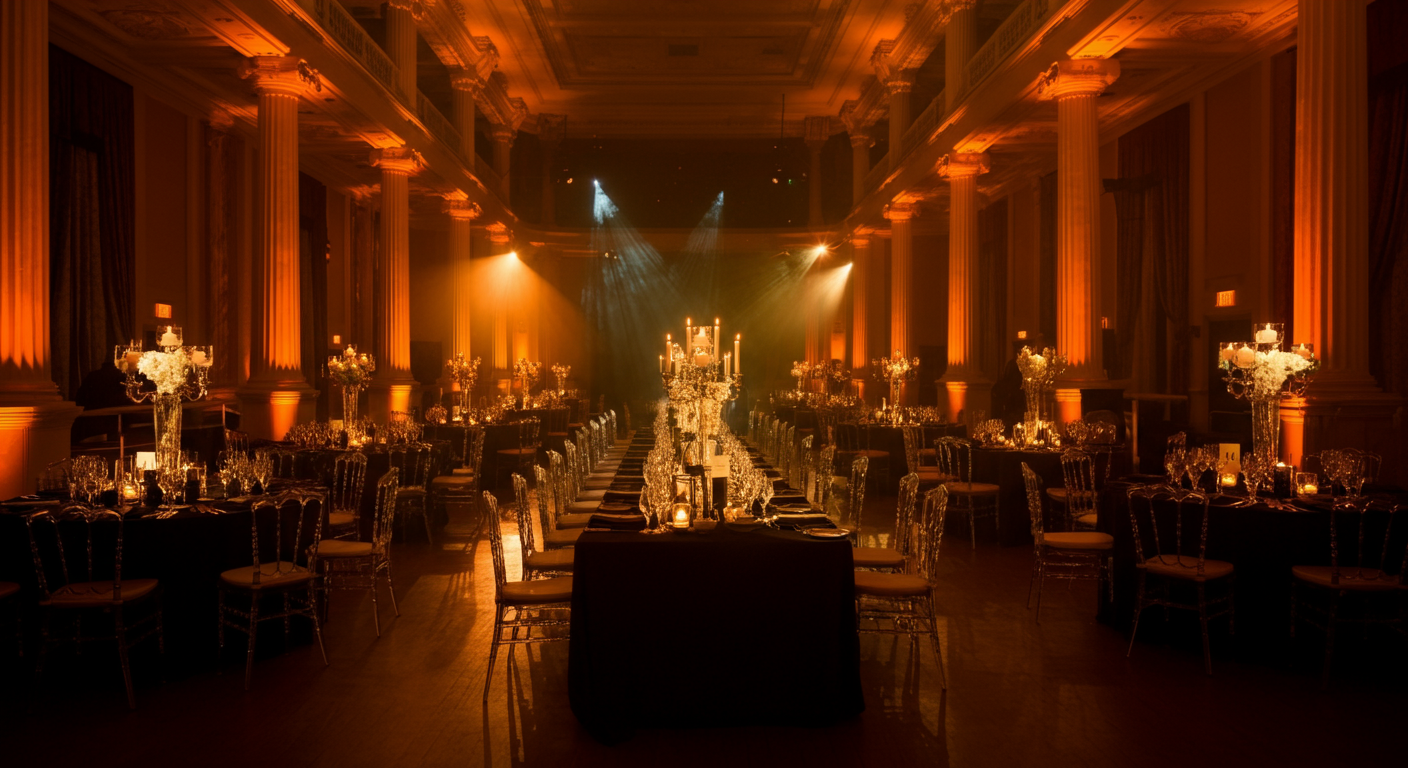
A corporate gala done right is one of the most powerful tools in an organization’s strategic arsenal. It builds culture, rewards performance, strengthens relationships, and positions a brand in ways that no digital campaign or quarterly report ever could. A corporate gala done poorly is an expensive embarrassment that erodes the very goodwill it was meant to create.
The difference between the two comes down to planning — specifically, the disciplined, creative, detail-obsessed planning that begins twelve months before the first guest walks through the door. This guide covers every phase of that process, from initial concept to post-event analysis, with the practical specificity that actually helps you execute.
Phase 1: Define Your Objectives (12 Months Out)
Every successful gala begins with a clear answer to one question: why are we doing this? The answer cannot be “because we do one every year.” It must be specific, measurable, and tied to organizational strategy.
Common gala objectives include celebrating a company milestone or anniversary, recognizing employee or partner achievements, cultivating donor or client relationships, launching a new brand identity or strategic direction, and fundraising for a charitable cause. Your objective determines everything that follows — venue selection, guest list composition, program structure, entertainment choices, and budget allocation. A gala celebrating a 50th anniversary demands different design language than one launching a rebrand. A donor cultivation event requires different flow than an employee recognition celebration.
Document your objectives in a brief creative strategy document. Include measurable success criteria: target attendance, fundraising goals, media coverage targets, or post-event sentiment scores. This document becomes the decision-making filter for every choice that follows.
Pro Tip: Assign a single internal stakeholder as the ultimate decision-maker. Galas planned by committee produce compromised experiences. One person should own the vision and have authority to make final calls on creative direction, budget allocation, and program content.
Phase 2: Establish Your Budget (11-12 Months Out)
Budget transparency from the outset prevents the cascading compromises that ruin otherwise well-conceived events. Corporate galas in New York City typically fall into three tiers:
Executive tier ($150,000-$300,000): 150-300 guests, established venue, professional entertainment, full AV production, custom scenic elements, premium catering with open bar.
Premium tier ($300,000-$750,000): 300-600 guests, landmark venue, headline entertainment, immersive scenic design, multi-course plated dinner, full lighting and sound design, professional event management.
Landmark tier ($750,000-$2,000,000+): 500-1,000+ guests, iconic venue, world-class entertainment, complete environmental transformation, bespoke everything. These are the galas featured in publications — and the ones that define organizational identity for years.
Budget allocation typically breaks down as follows: venue and catering (40-50%), production and AV (15-25%), entertainment (10-20%), scenic and floral (10-15%), and management and staffing (8-12%). The most common budgeting mistake is underallocating for production. Lighting, sound, and AV are what transform a dinner in a ballroom into a gala — they deserve at least 20% of total spend.
Phase 3: Venue Selection (10-11 Months Out)
Venue selection is the single most consequential decision in gala planning. The right venue does half your design work for you. The wrong venue forces you to spend budget overcoming architectural limitations.
Evaluate venues against these criteria: capacity (both for reception flow and seated dining), ceiling height (critical for lighting and scenic), load-in logistics (freight elevators, loading docks, time restrictions), acoustic properties, existing AV infrastructure, catering capabilities (in-house vs. approved vendors), exclusivity agreements, noise restrictions, and curfew times.
Schedule site visits during the same time of day as your event. A venue that feels dramatic at 2 PM may feel entirely different at 8 PM. Bring your production designer to the site visit — they will see opportunities and limitations that event planners often miss.
Pro Tip: Negotiate venue contracts carefully. Key terms to push on include setup and teardown windows (always request more than offered), force majeure clauses, minimum spend flexibility, and the ability to bring in outside vendors for lighting, AV, and entertainment. A venue that restricts your vendor choices restricts your creative possibilities.
Phase 4: Creative Theme and Design Direction (9-10 Months Out)
A gala theme is not a tagline printed on an invitation. It is a comprehensive design language — a unified aesthetic system that governs every visual, spatial, and sensory element of the experience. The best themes emerge from the intersection of your organizational identity, your event objectives, and the architectural character of your chosen venue.
Develop a visual mood board that establishes color palette, material language, typographic style, and spatial composition. This board should be detailed enough that any vendor — florist, lighting designer, stationer, caterer — can look at it and understand the aesthetic intent without verbal explanation.
Consider how your theme translates across every touchpoint: save-the-date, invitation suite, arrival experience, cocktail hour environment, dinner setting, stage design, entertainment aesthetic, party favors, and post-event communications. Consistency across these touchpoints is what separates a professional gala from a decorated dinner. Our work on the Roivant Holiday Gala at the New York Public Library exemplifies this approach — every detail, from arrival to departure, expressed a singular creative vision.
Phase 5: Entertainment and Programming (8-9 Months Out)
Entertainment is booked early because the best acts have long lead times — especially during peak gala season (October through December). But before you book talent, design your program structure.
A well-paced gala typically follows this arc: arrival and cocktail reception (60-90 minutes), transition to dinner seating (15 minutes), welcome remarks and dinner service (60-75 minutes), program or awards segment (30-45 minutes), entertainment or performance (30-60 minutes), dancing or after-party (60-90 minutes). The total runtime should not exceed four to four and a half hours. Galas that run longer than that test even the most engaged audience’s endurance.
Entertainment options range from live bands and DJs ($5,000-$50,000) to headline musical acts ($50,000-$500,000+), theatrical performances, interactive installations, and immersive experiences. The entertainment should amplify your theme, not compete with it. A jazz quartet complements a sophisticated black-tie affair. An electronic DJ set suits a modern, high-energy celebration. Choose entertainment that serves the overall experience rather than just filling a time slot.
Pro Tip: Build “transition moments” into your program — short, designed experiences that move guests from one phase to the next. A dramatic lighting shift, a brief musical interlude, or a choreographed reveal transforms what would otherwise be awkward logistical transitions into memorable moments.
Phase 6: Catering and Beverage (7-8 Months Out)
Food at a gala is not merely sustenance — it is a design element, a pacing tool, and often the most discussed aspect of the evening. Invest accordingly.
For seated dinners, plan three to four courses with options that accommodate common dietary restrictions without requiring guests to self-identify. The best caterers design menus where the dietary-inclusive option is the most appealing option — not a sad substitution.
Cocktail hour food should be designed for standing consumption: nothing that requires a knife, nothing that drips, nothing that requires two hands. Passed hors d’oeuvres should be one-bite compositions that look as good as they taste. Station-based food creates natural gathering points and gives guests a reason to move through the space.
Beverage programs should include a signature cocktail that reflects your theme, a curated wine selection for dinner service, premium spirits at the bar, and thoughtful non-alcoholic options that go beyond soda and juice. Budget $75-$150 per person for food and beverage at a premium gala, more for landmark events.
Phase 7: AV and Production Design (6-8 Months Out)
Production design is where good galas become great ones. This encompasses lighting design, sound engineering, video production, scenic fabrication, and technical direction. These elements create the emotional environment that guests experience — even when they are not consciously aware of it.
Lighting is the single most impactful production element. It sets mood, directs attention, creates depth, reveals architecture, and transforms space. A well-lit gala with modest decor will always outperform an elaborately decorated event with flat lighting. Invest in a professional lighting designer — not just a technician who points fixtures, but a designer who understands color, shadow, movement, and emotion.
Sound design includes the obvious — microphones, speakers, monitors for speeches and entertainment — but also the subtle: ambient sound levels during dinner, acoustic treatment for cavernous venues, and carefully managed volume transitions between program segments. Poor sound is one of the fastest ways to undermine an otherwise beautiful event.
Phase 8: Guest Management and Communications (5-6 Months Out)
Guest management begins with list development and extends through every communication touchpoint: save-the-dates, formal invitations, RSVP management, dietary and accessibility inquiries, pre-event communications, day-of logistics, and post-event follow-up.
Save-the-dates should go out six months before the event. Formal invitations four months out. RSVP deadlines should be set at six weeks before the event to give caterers and production teams adequate planning time.
Invest in a professional invitation suite that reflects your creative theme. Digital invitations are acceptable for many corporate events, but landmark galas still warrant physical invitations — they signal investment and importance in a way that email cannot replicate. The invitation is the first tangible expression of your event experience; it sets expectations and builds anticipation.
Pro Tip: Create a dedicated event microsite or landing page for guest information. Include venue details, parking and transportation, dress code guidance, accessibility information, and a clear point of contact for questions. This reduces inbound inquiries and ensures every guest has the information they need to arrive confident and prepared.
Phase 9: Run-of-Show and Rehearsal (2-4 Weeks Out)
The run-of-show document is the master blueprint for your event — a minute-by-minute timeline that coordinates every element: lighting cues, sound cues, video playback, stage management, catering service, guest flow, speaker movements, and entertainment changeovers. A professional run-of-show for a 500-person gala typically runs 15-20 pages.
Conduct a full production rehearsal at the venue at least 48 hours before the event. This rehearsal should include all speakers, all AV cues, all lighting states, and a complete walk-through of the program from arrival through departure. The rehearsal is where you discover that the CEO’s speech runs eight minutes long, that the lighting transition between dinner and entertainment is too abrupt, and that the band’s sound check reveals acoustic problems that need treatment. These discoveries during rehearsal are manageable. On event night, they are catastrophic.
Phase 10: Day-of Execution (Event Day)
Event day is not the time for creative decisions — it is the time for disciplined execution of a well-developed plan. The production team should arrive for load-in eight to twelve hours before doors open, depending on venue complexity. A professional stage manager or technical director should run the show from a production table with clear communication to all department heads via intercom.
Key day-of priorities include completing all scenic, lighting, and AV installation with time for a final check, conducting a complete audio walk-through in the empty room, briefing all catering and service staff on program timing and flow, testing all video content and presentation materials, confirming all talent and speakers have arrived and are prepared, and walking the entire guest journey from arrival through departure to catch any gaps.
The event producer’s job during the event itself is to manage the unexpected — because something unexpected always happens. Weather disruptions, late VIPs, technical failures, schedule adjustments, and vendor issues are not crises if you have contingency plans. Build redundancy into critical systems: backup microphones, secondary video playback, alternative entrance routes, and flexible program segments that can be shortened or extended as needed.
Phase 11: Post-Event Analysis (1-2 Weeks After)
The event is over. The temptation is to move on immediately. Resist it. Post-event analysis is where organizational learning happens — and where you build the case for next year’s investment.
Conduct a formal debrief with all key stakeholders and vendors within two weeks of the event. Review what worked, what fell short, and what you would do differently. Collect quantitative data: attendance rates, social media engagement, media coverage, survey responses, and any direct business outcomes traceable to the event. Document everything in a post-event report that becomes the starting point for next year’s planning.
Send personalized thank-you communications to guests, sponsors, speakers, and partners within one week. Share professional photography and video content within two weeks. The post-event communication window is brief — capitalize on the emotional momentum while the experience is still fresh.
Why Work With a Full-Service Production Company
The twelve phases outlined above represent hundreds of decisions, dozens of vendor relationships, and thousands of logistical details. Internal event teams — even excellent ones — rarely have the bandwidth, vendor relationships, or technical expertise to execute at the level a corporate gala demands.
A full-service production company brings creative vision, technical infrastructure, vendor networks, and operational discipline under a single point of accountability. The result is not just a smoother planning process — it is a fundamentally better event, because every element is designed and executed by specialists who do this work every day.
At GEO Events, gala production is one of our core disciplines. We bring architectural design thinking, cinematic production values, and obsessive attention to detail to every engagement — because we believe corporate galas should be as extraordinary as the organizations hosting them.
Ready to start planning your next corporate gala? Contact GEO Events to schedule a consultation and discover what’s possible.